مَلَفّ ਪੋਰਟਫੋਲੀਓ پورٹ فولیو Pọtụfoliyo
Hamad Ozi
Portfolio
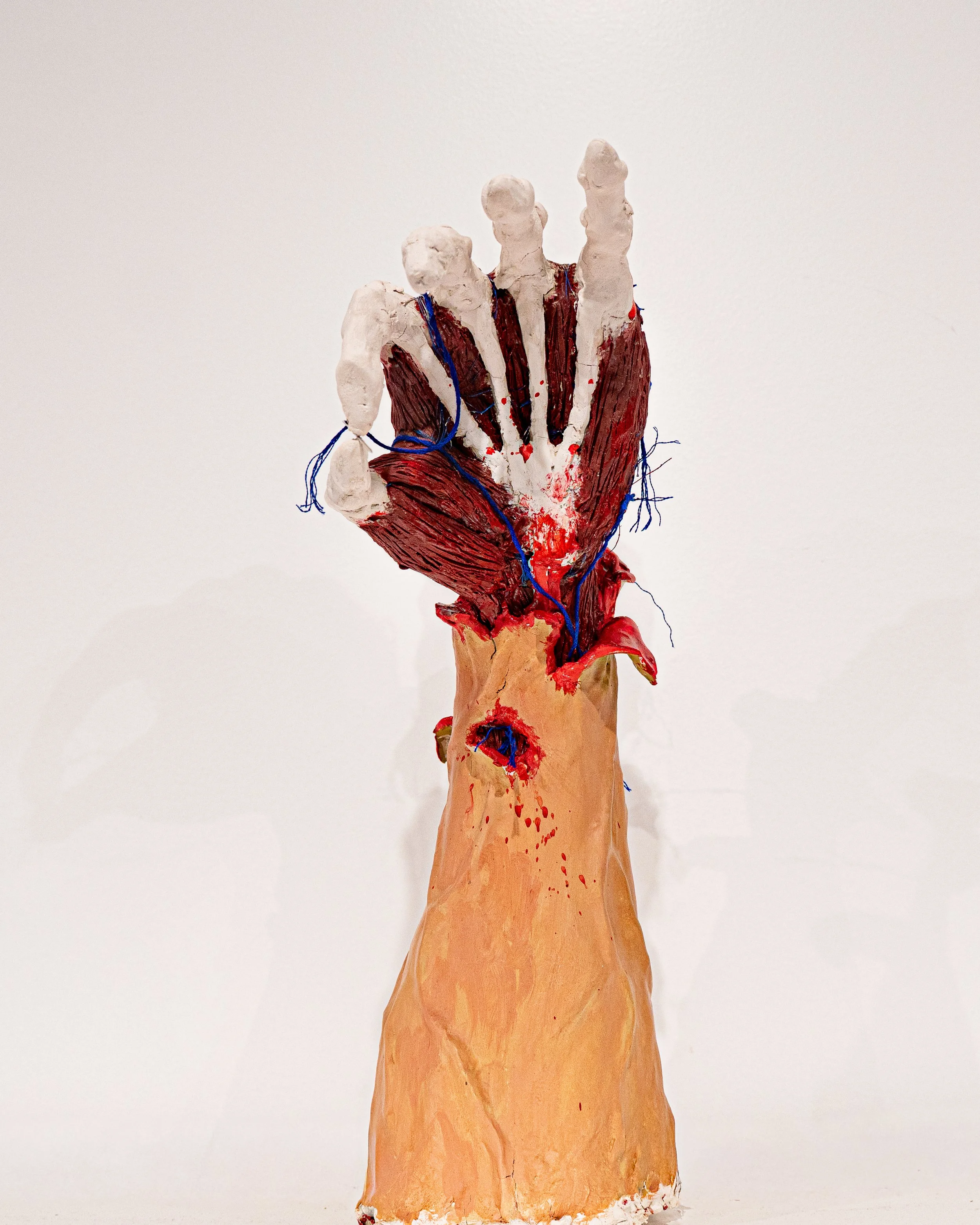
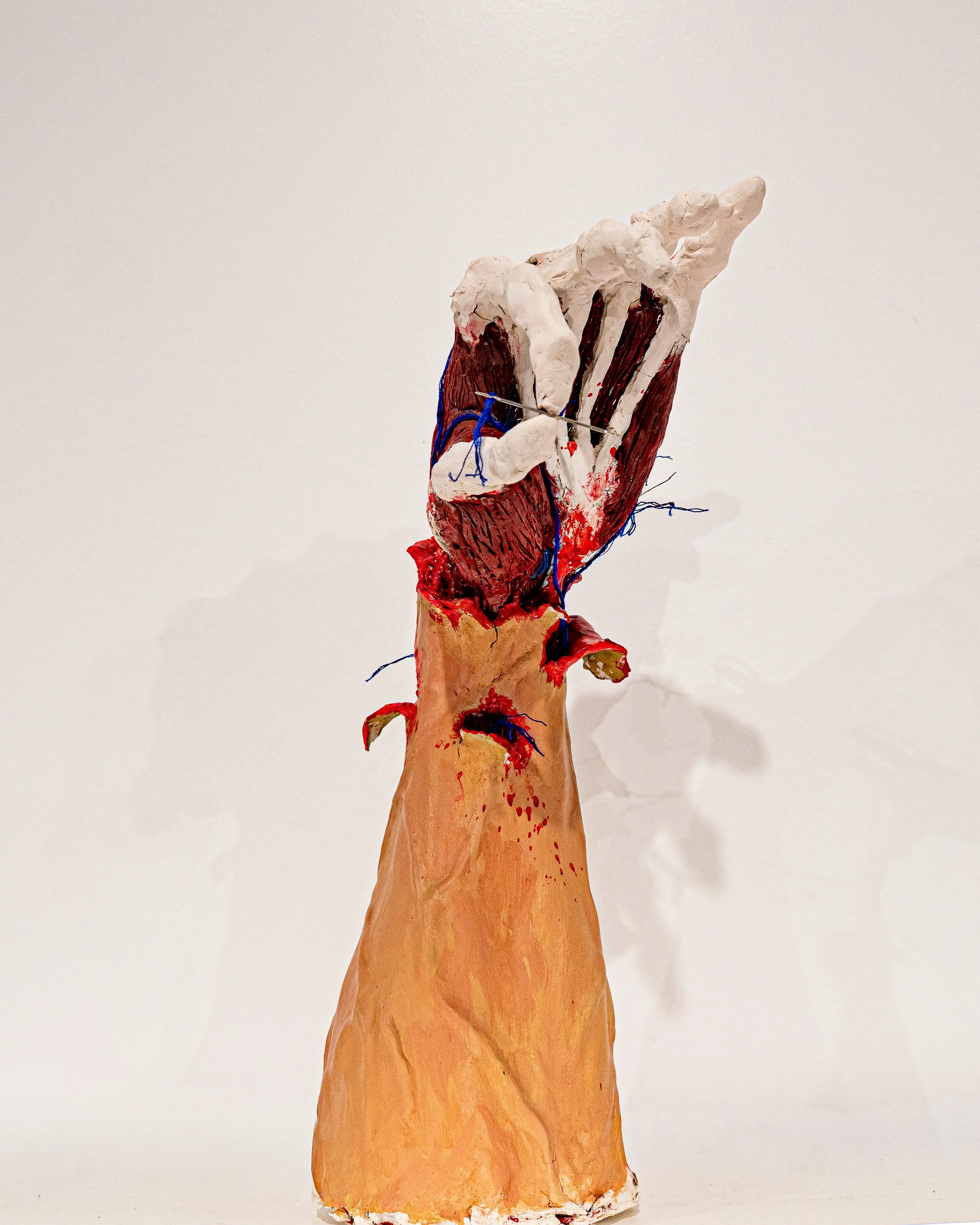
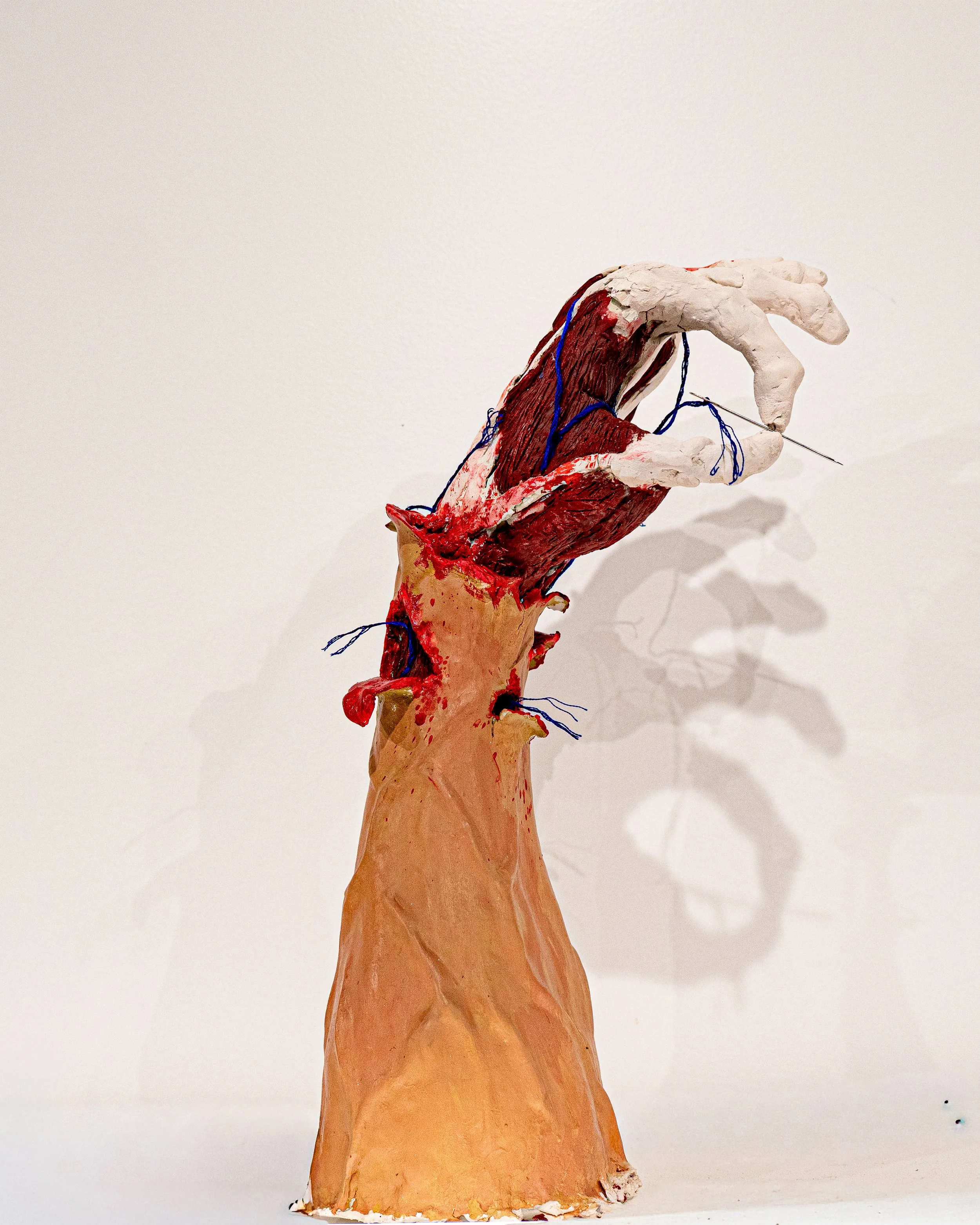
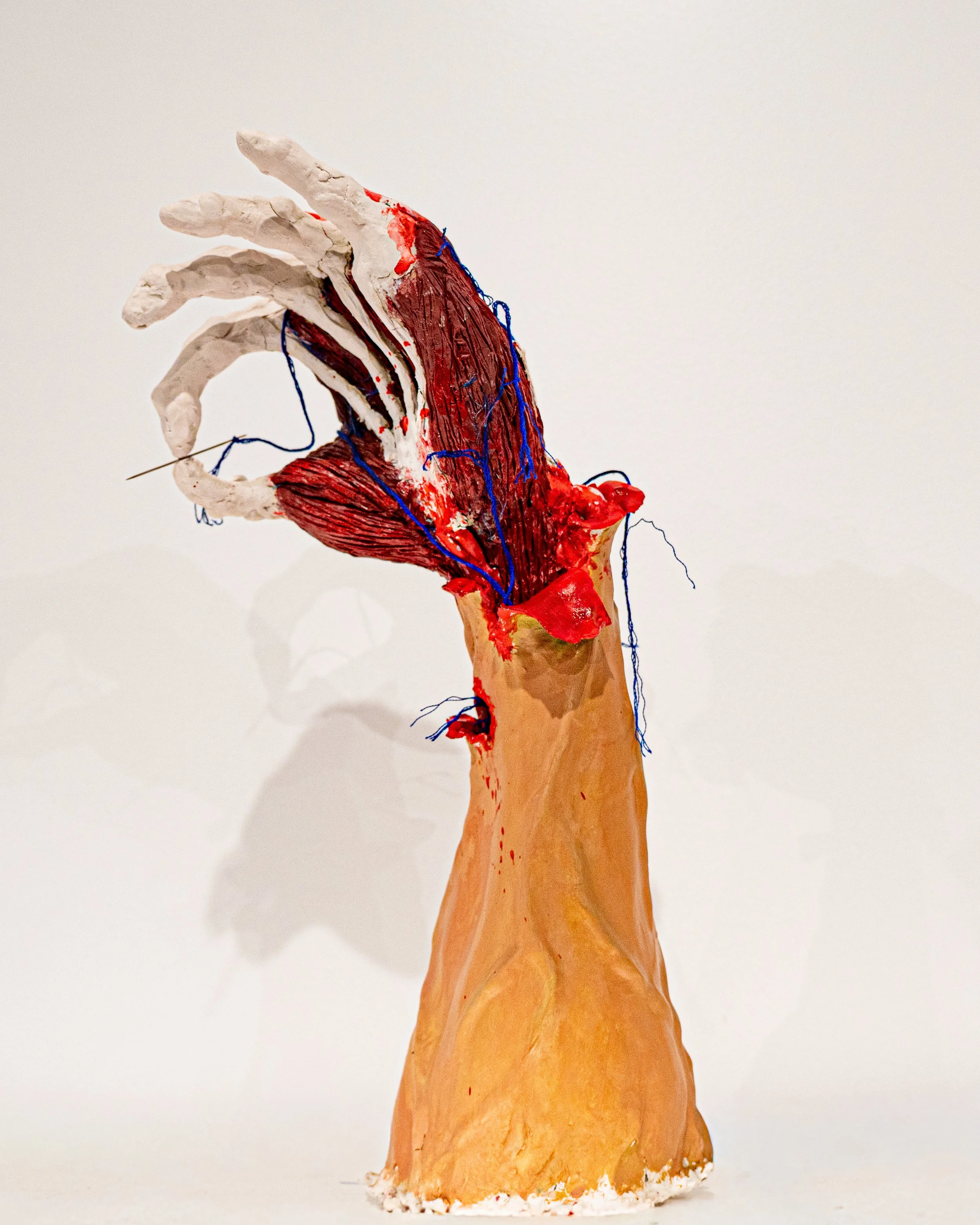
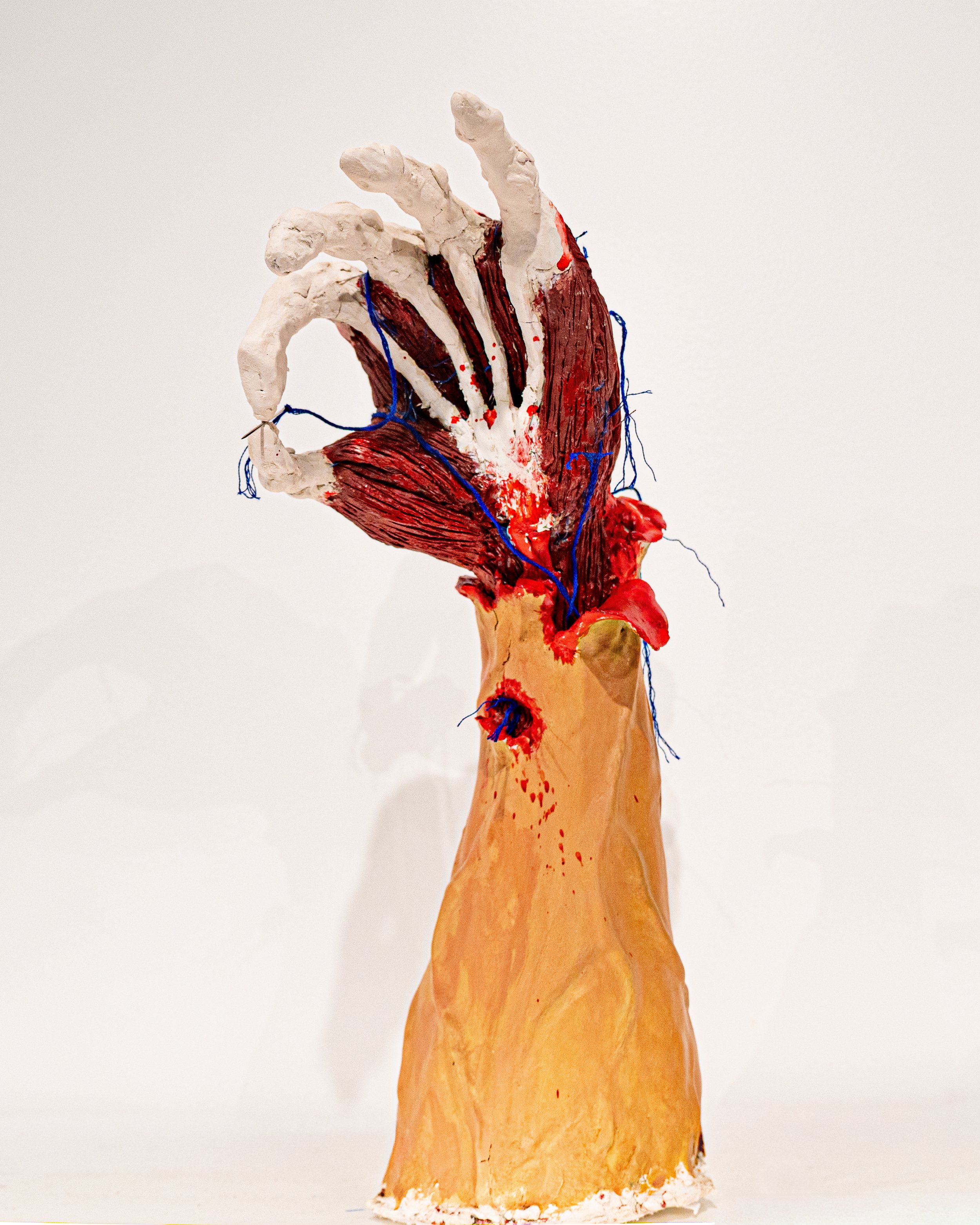
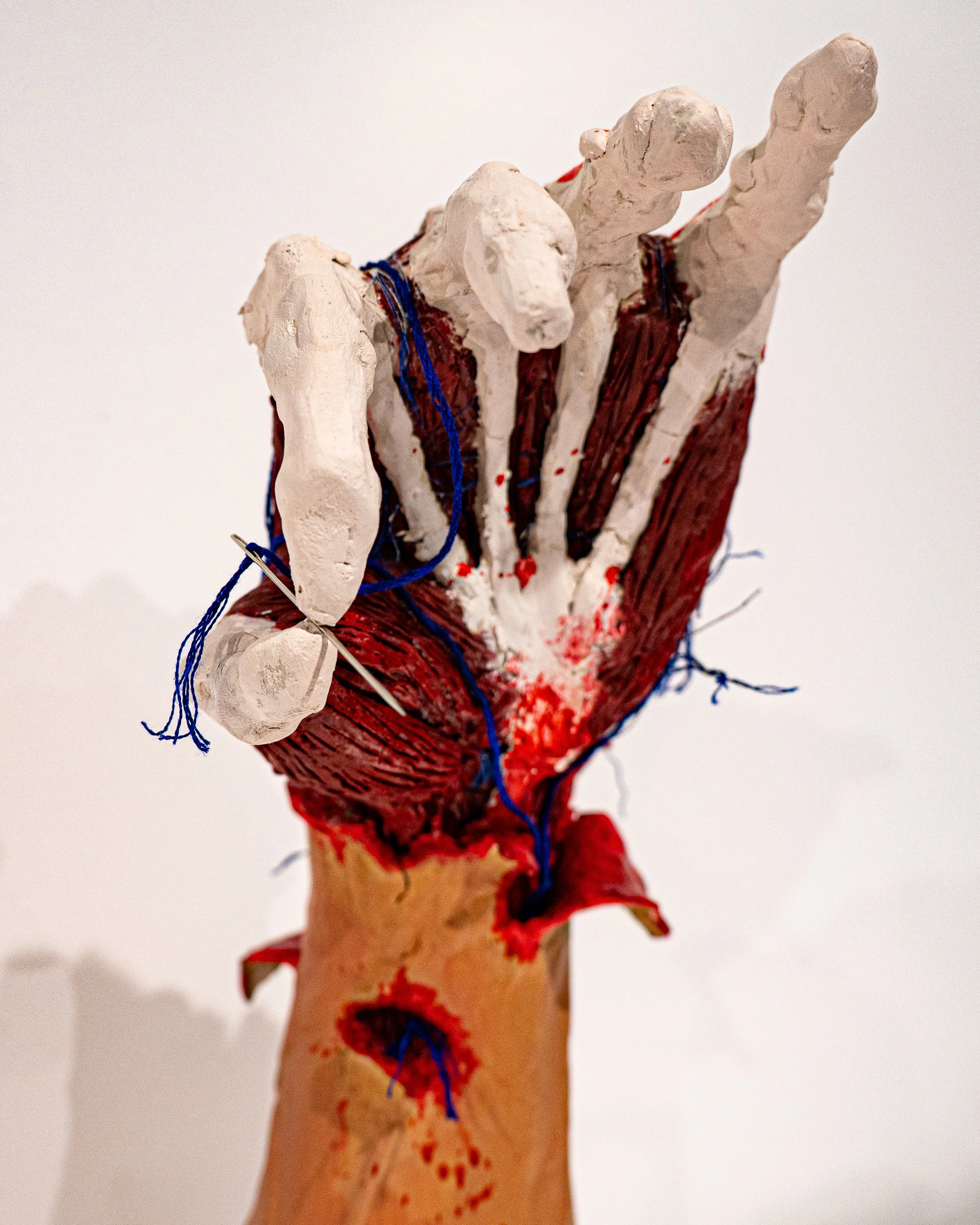
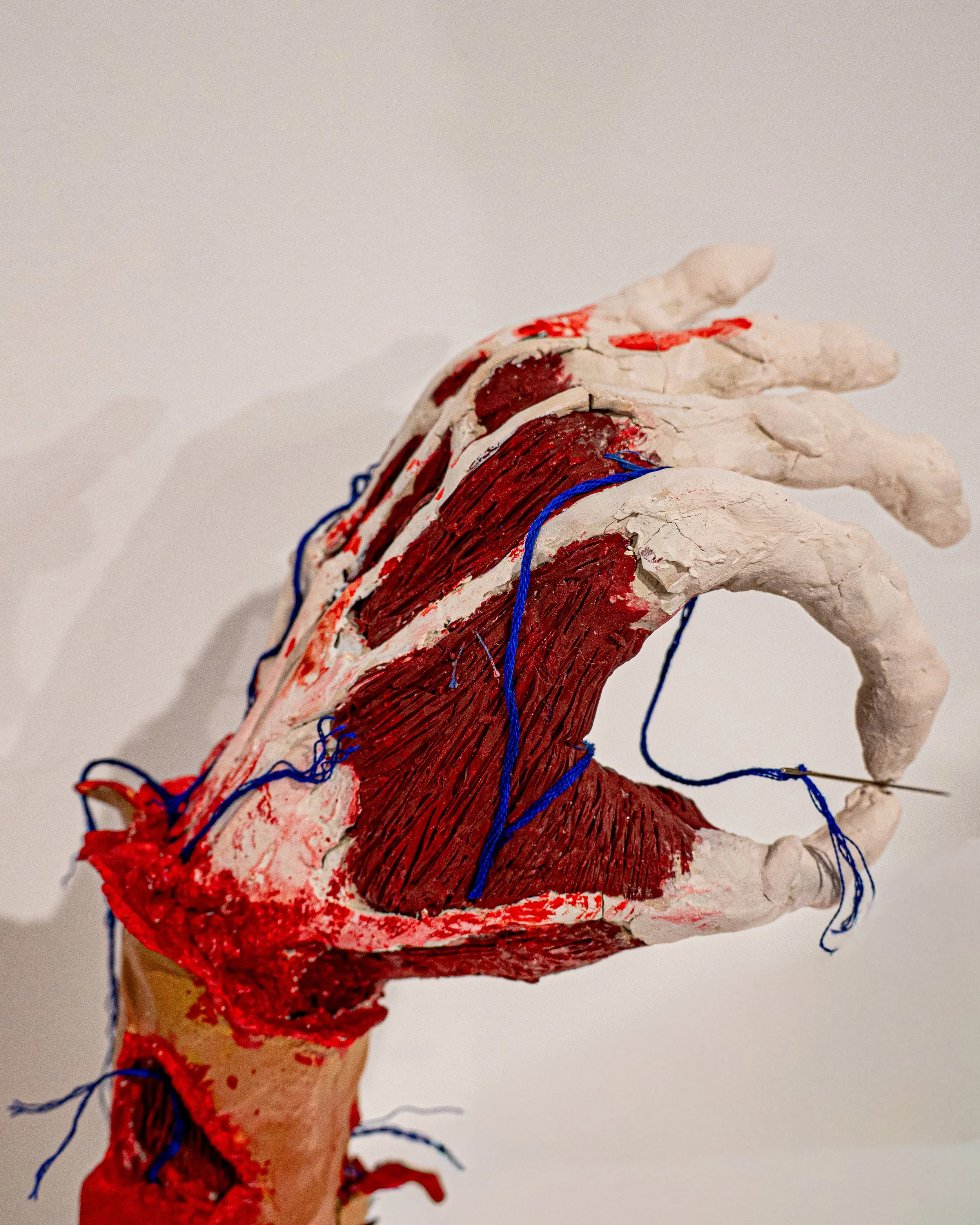
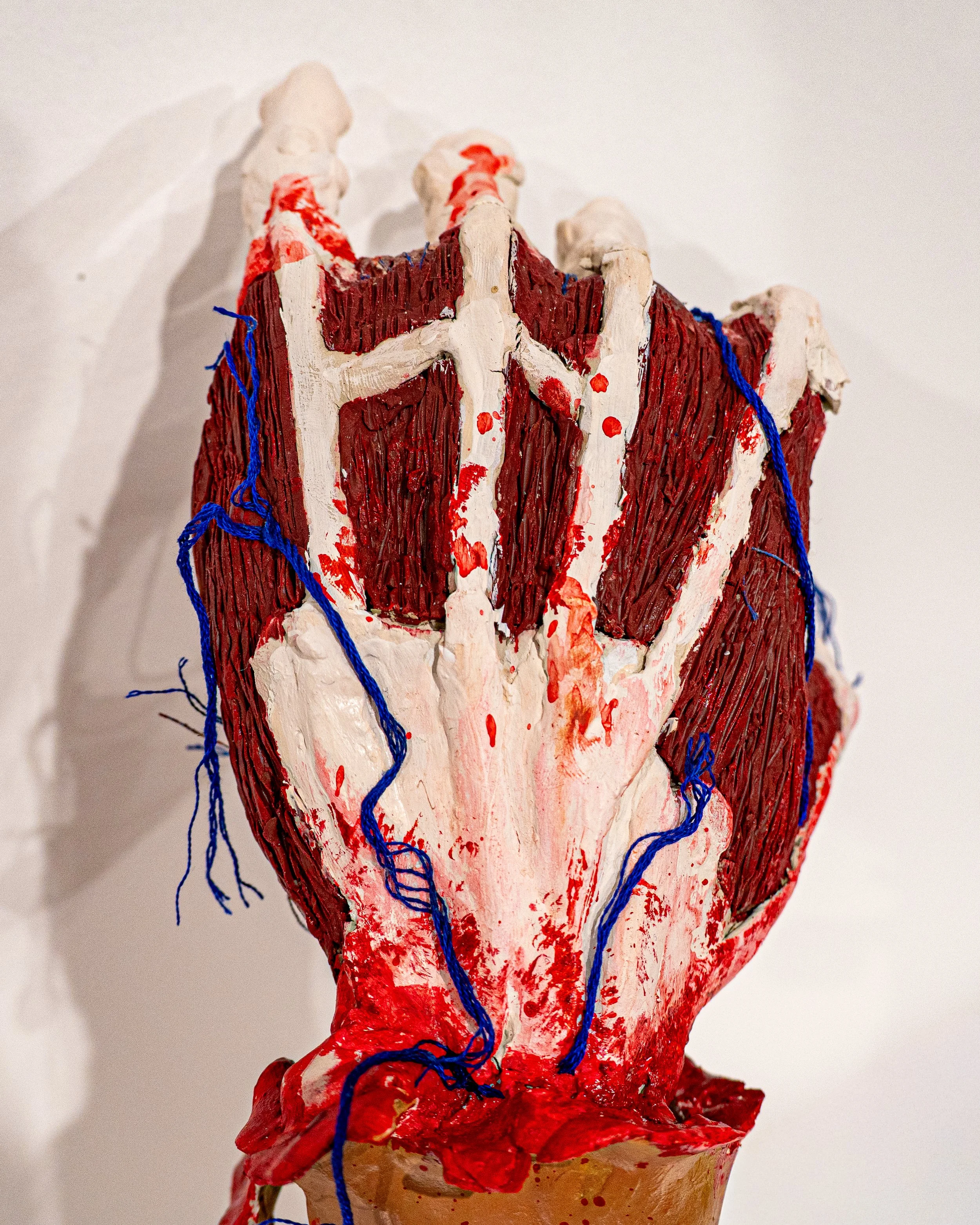
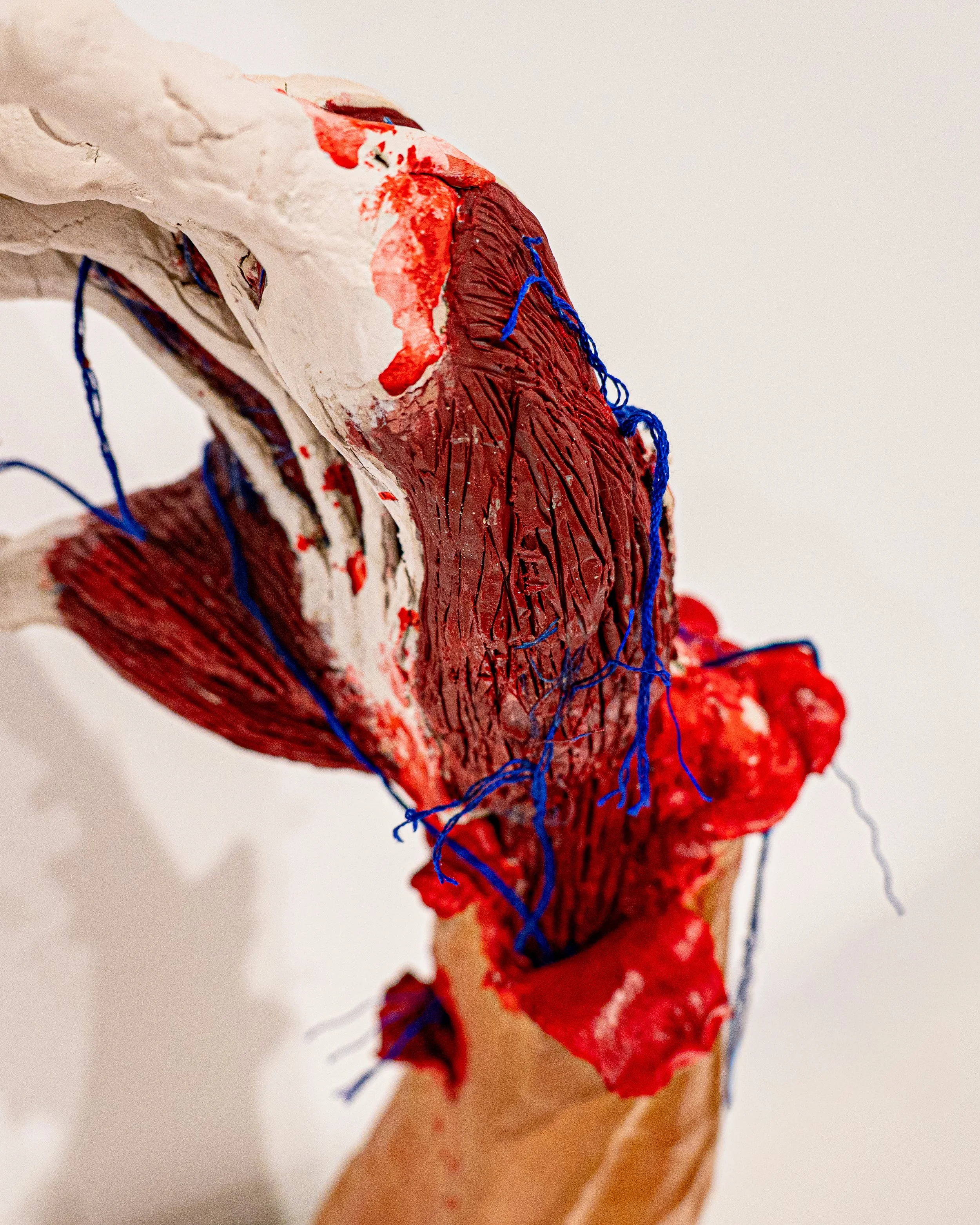
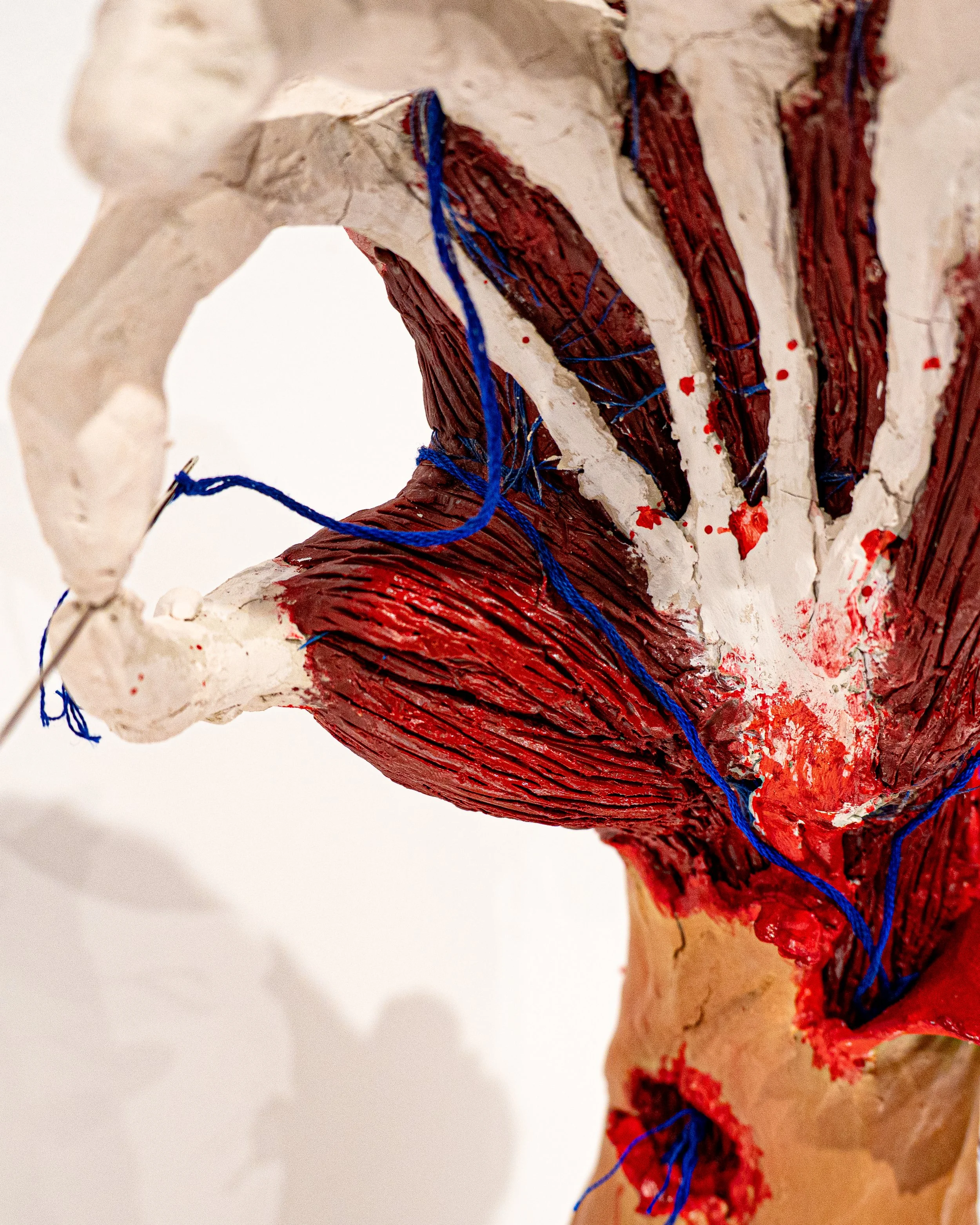
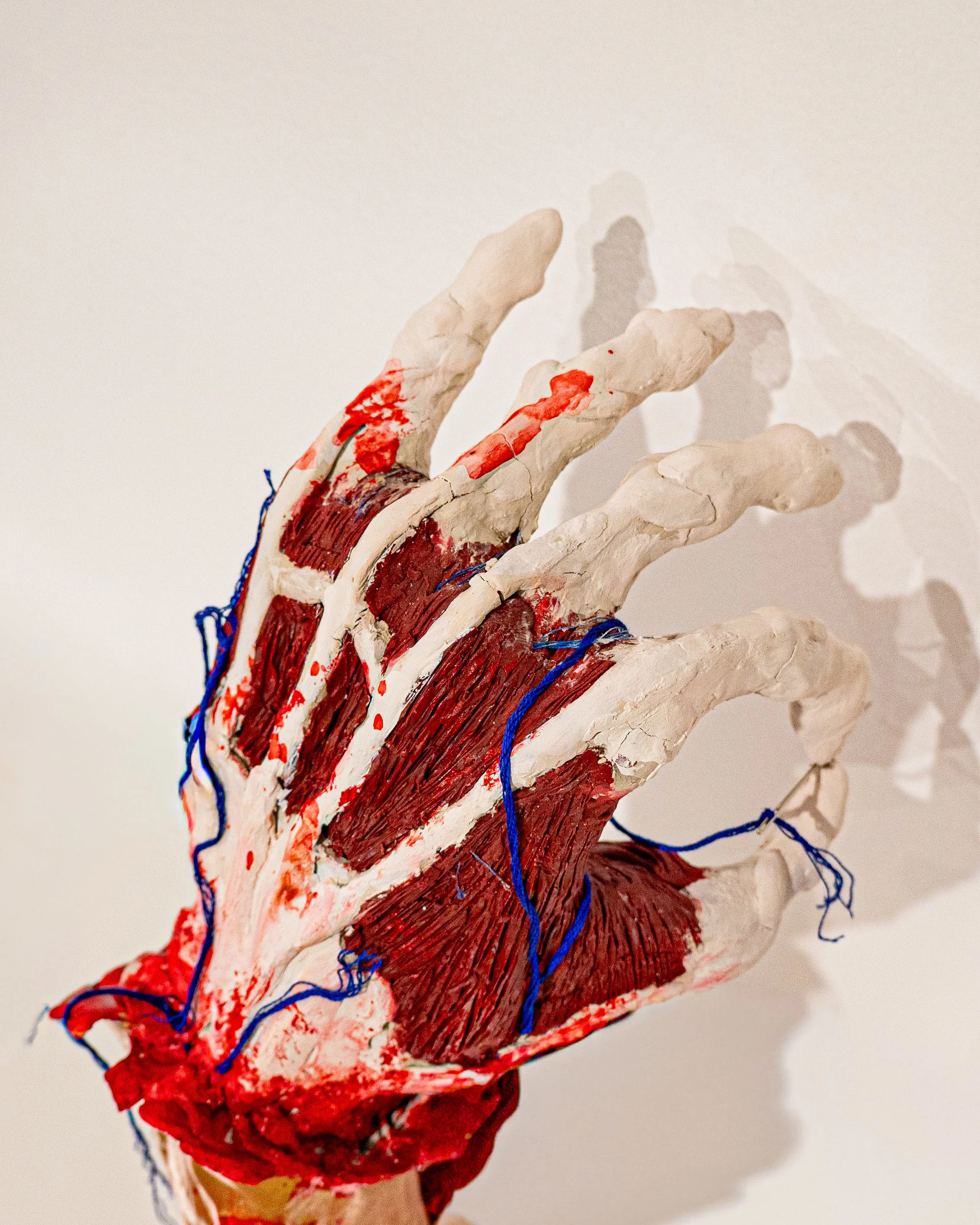
Suture Self
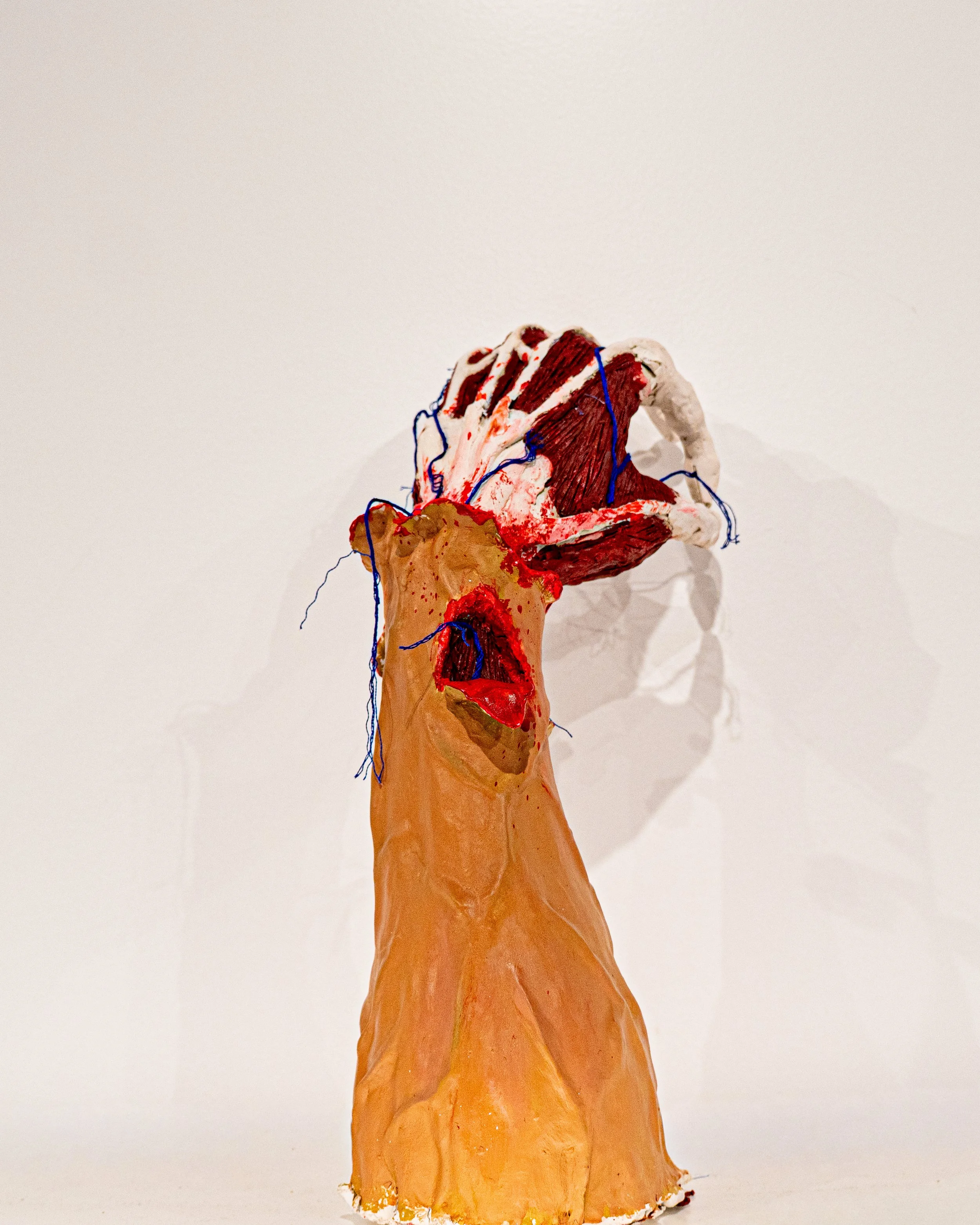
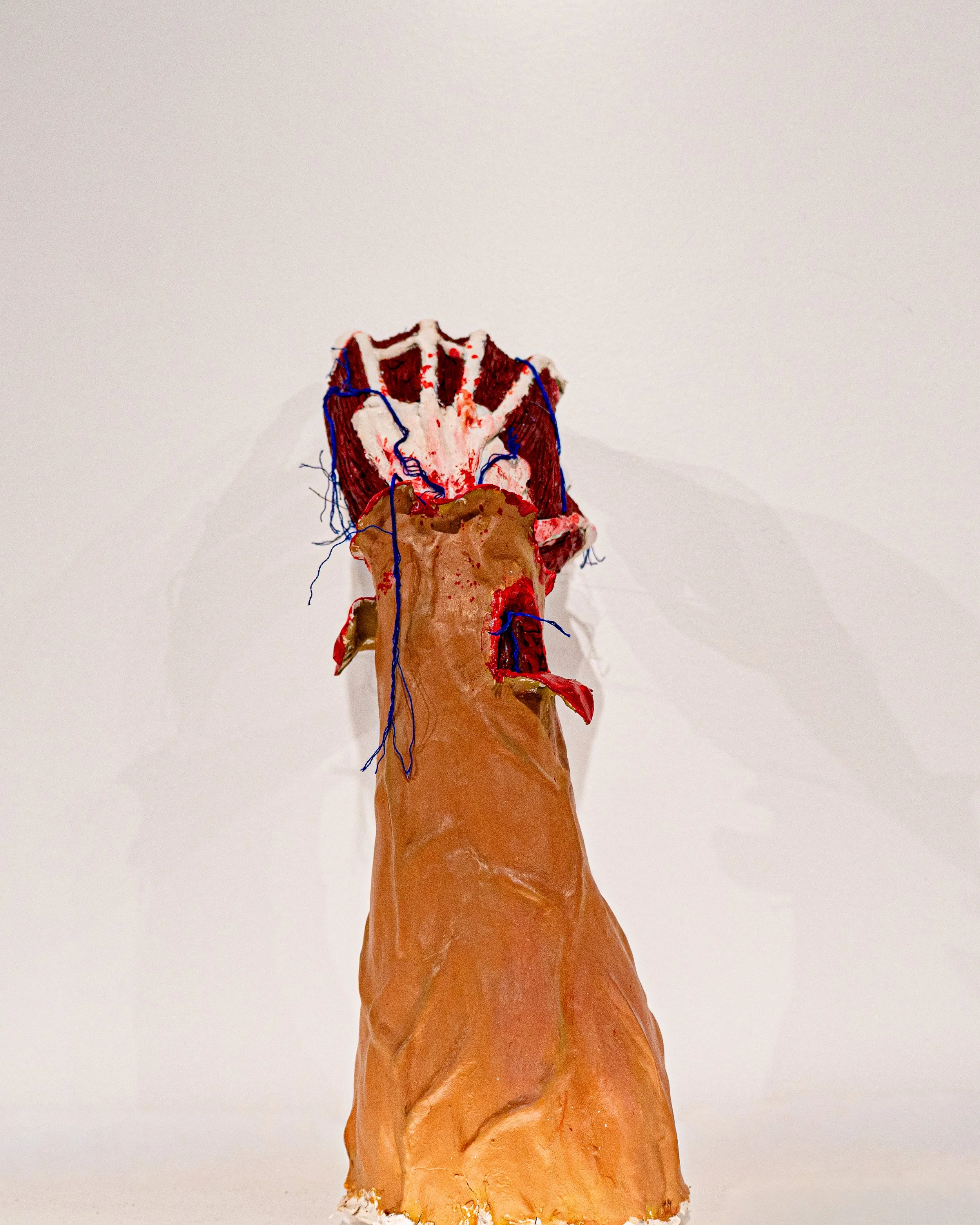
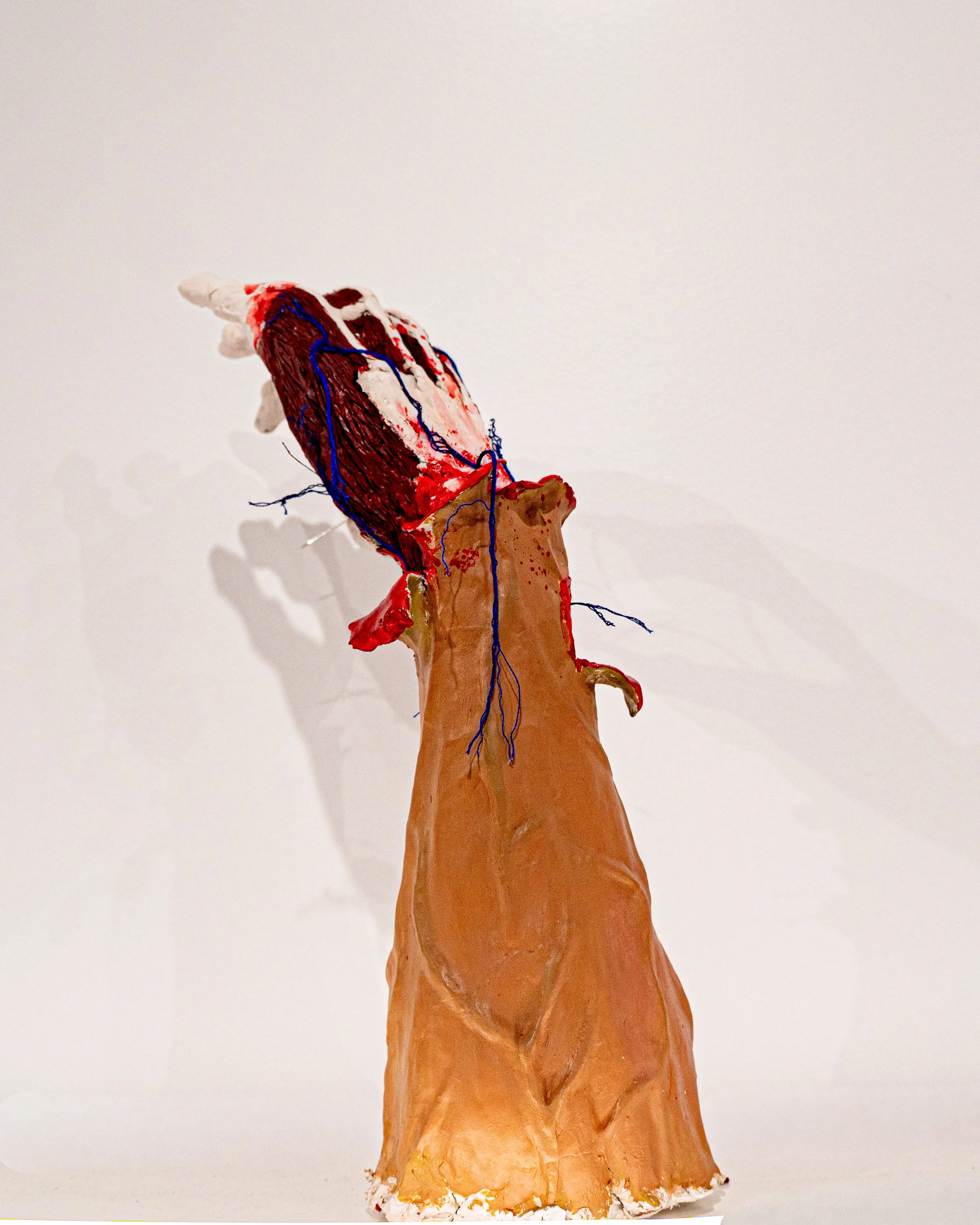
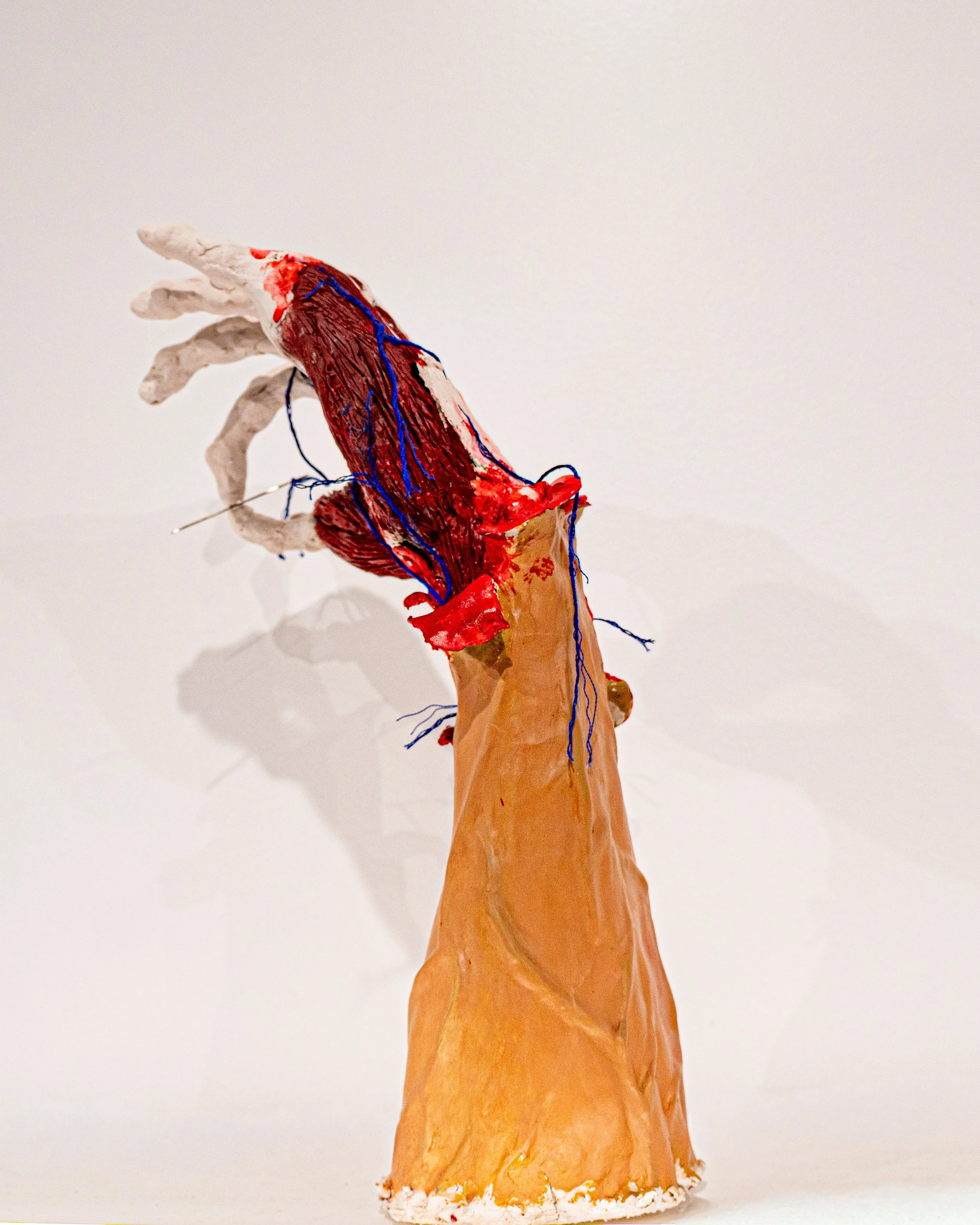
2025, 6x5x14 inches, Clay
Struggling with depression, I found myself trapped in a constant state of apathy but it was through art that I began to feel a sense of true healing.
This piece depicts a wounded arm sewing its own veins with thread, symbolizing my journey of recovery. Each piece of art I made, or garment I stitched, became a way of suturing my own wounds.
Friends and family members didn’t understand my choice to leave a “safe” and practical path like STEM for art and fashion. In a society that often responds to unconventional choices with a shrug and a ‘suit yourself,’ I decided to embrace that and follow my own path.
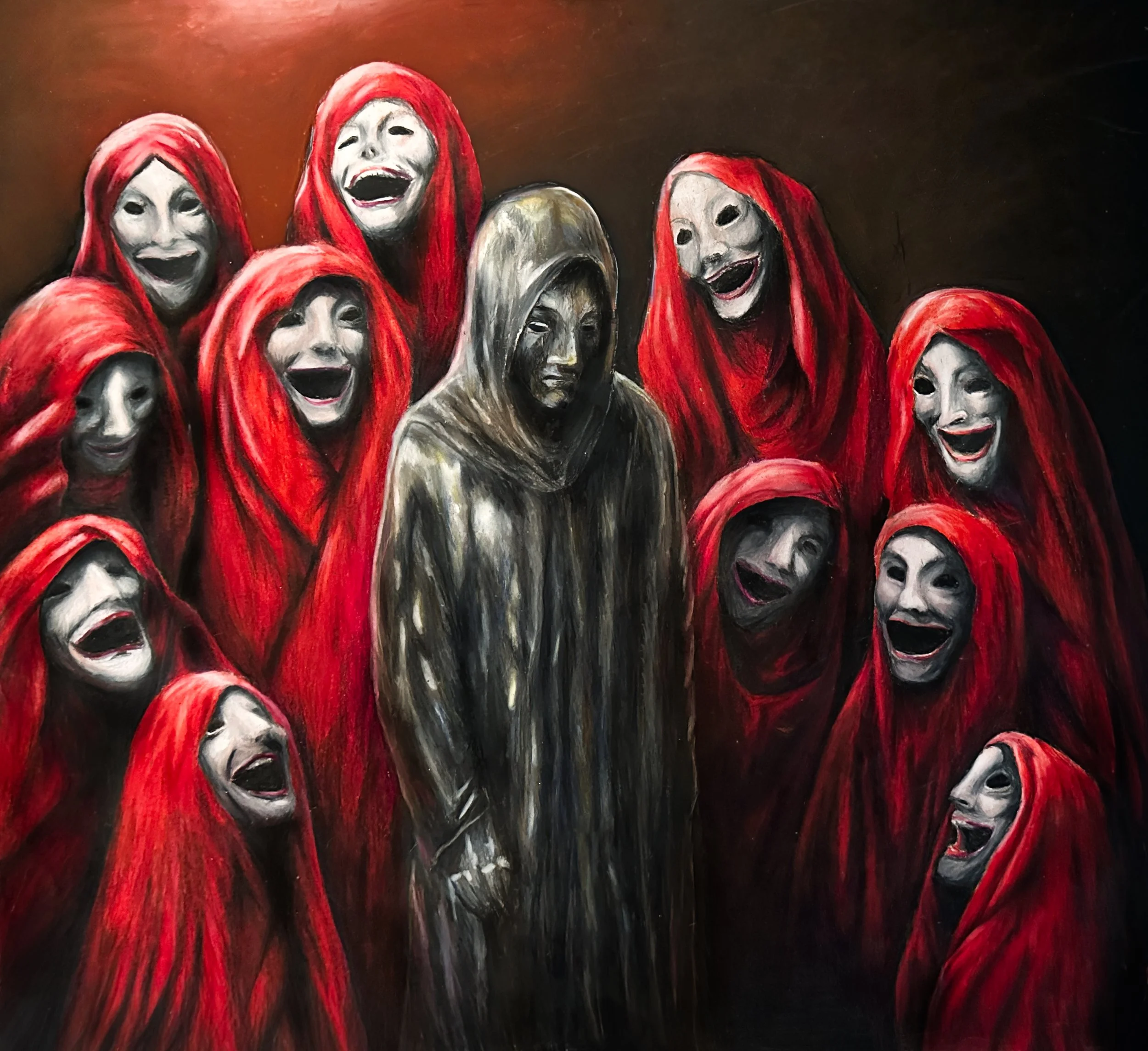
Eyes that Forgot How to Cry
2025, 19x18 inches, Color pencil & Oil pastel
This work reflects how it feels to navigate faith as a young person today, which is often met with judgment, rejection, and mockery.
The figure in the center appears metallic and rusted, while the surrounding ones are loud, bright, and colorful. In my faith, Islam, we believe the world deceives us with fleeting pleasures while inside our hearts rust and blacken. The figure in the center represents those who discover this truth, while the colorful figures are those who put on a ‘mask’. My Imam would always end his sermon with a prayer: “protect us always from hearts that are not humble, tongues that are not wise, and eyes that have forgotten how to cry.” In Islam, crying is a profound act of humility, reflection, and worship; a spiritual release that reconnects us with our innermost selves. This piece seeks to capture that tension between external vitality and inner fortitude.
Forgotten Cotton
2025, 1280x720 pixels, Digital
I have had the privilege of interning with the fashion brand Art Comes First, which included assisting with their installation at the 1-54 Contemporary African Art Fair. Their installation, Textile Language, explored the cultural and social narratives embedded in African textiles, highlighting Black cotton and the Afro comb motif.
Inspired by their work, I created my own interpretation, crafting a narrative about the fashion industry today and its historical roots. The animation opens with a man picking cotton in a field using an afro comb, representing both the African-American slaves who harvested cotton and the contemporary cotton farmers of today. The Afro comb serves as a symbol of racial pride and empowerment amid exploitation. As the man tosses the cotton, it falls through successive scenes; ignored, brushed aside, and ultimately landing beside a rack of finished garments. The story traces a cycle of exploitation and consumerism: the labor of agriculture is unacknowledged, the creativity of design overlooked, and the craft of construction disregarded. What reaches us is cloth stripped of its origin and context; its perceived value is often dictated not by the human effort behind it, but by the brand name that labels it.
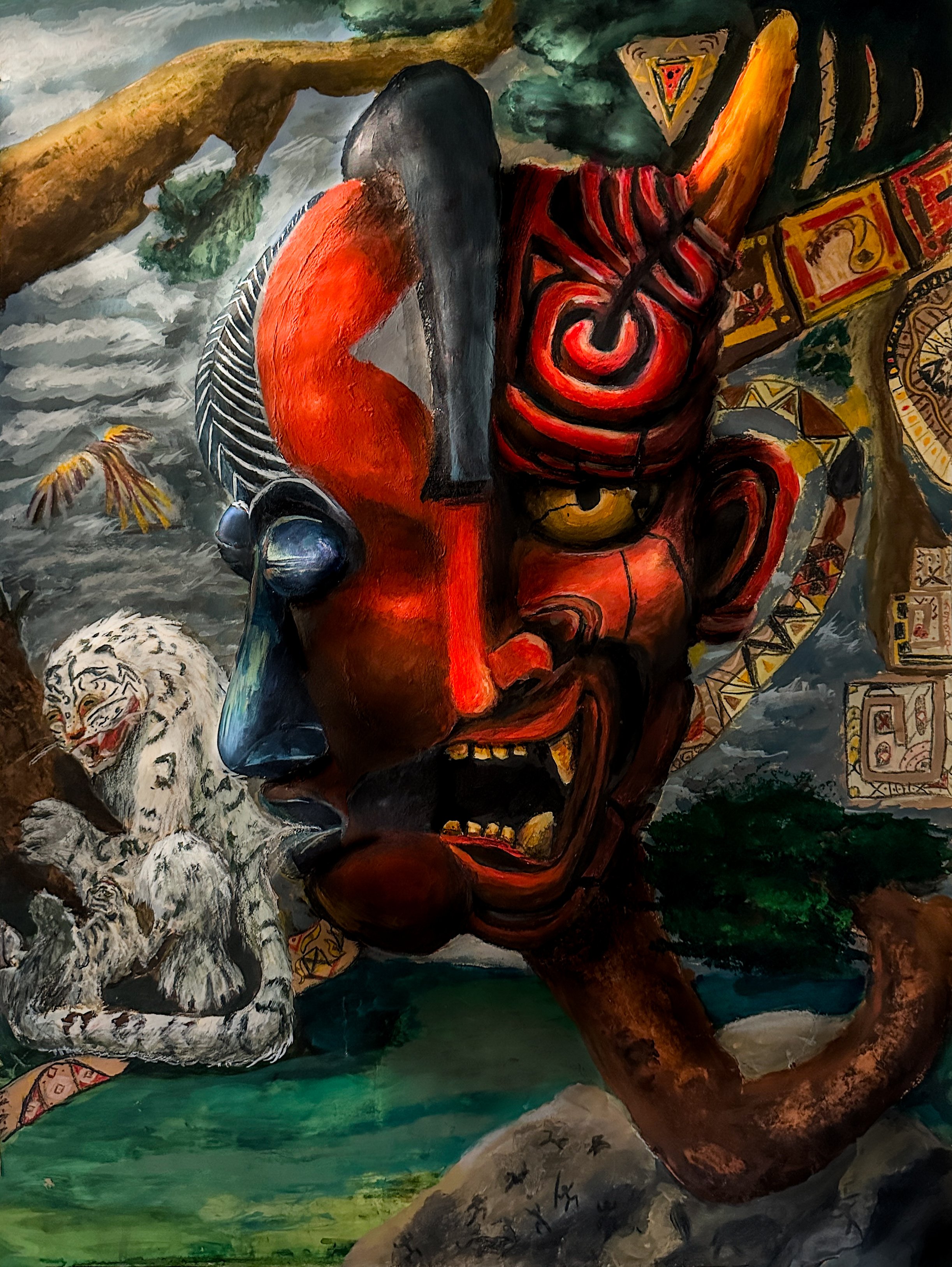
In the world of fashion, the line between cultural appreciation and appropriation is often blurred. As an artist I’m inspired by both Japanese craft and my own Nigerian heritage. This piece explores how blending one’s own heritage with the cultures that inspire us can foster genuine appreciation through the means of common practices.
The mask facing left is inspired by African tribal masks, specifically from Yoruba and Igbo, often worn during rituals to communicate with ancestors and spirits. The figure facing forward draws from the Japanese Hannya mask, embodying the complexity of human emotion: anger from one perspective, sadness or remorse from another. The background blends motifs from Zulu, Japanese, and Nigerian tradition: the tiger and bird of Japanese mythology, to black clouds from Nigerian folklore, to abstract tribal patterns of the Zulu people in South Africa, creating a nexus between these cultures’ spiritual and artistic legacies.
Afro-Mingei
2025, 18x24 inches, Acrylic paint & Color pencil & Oil pastel
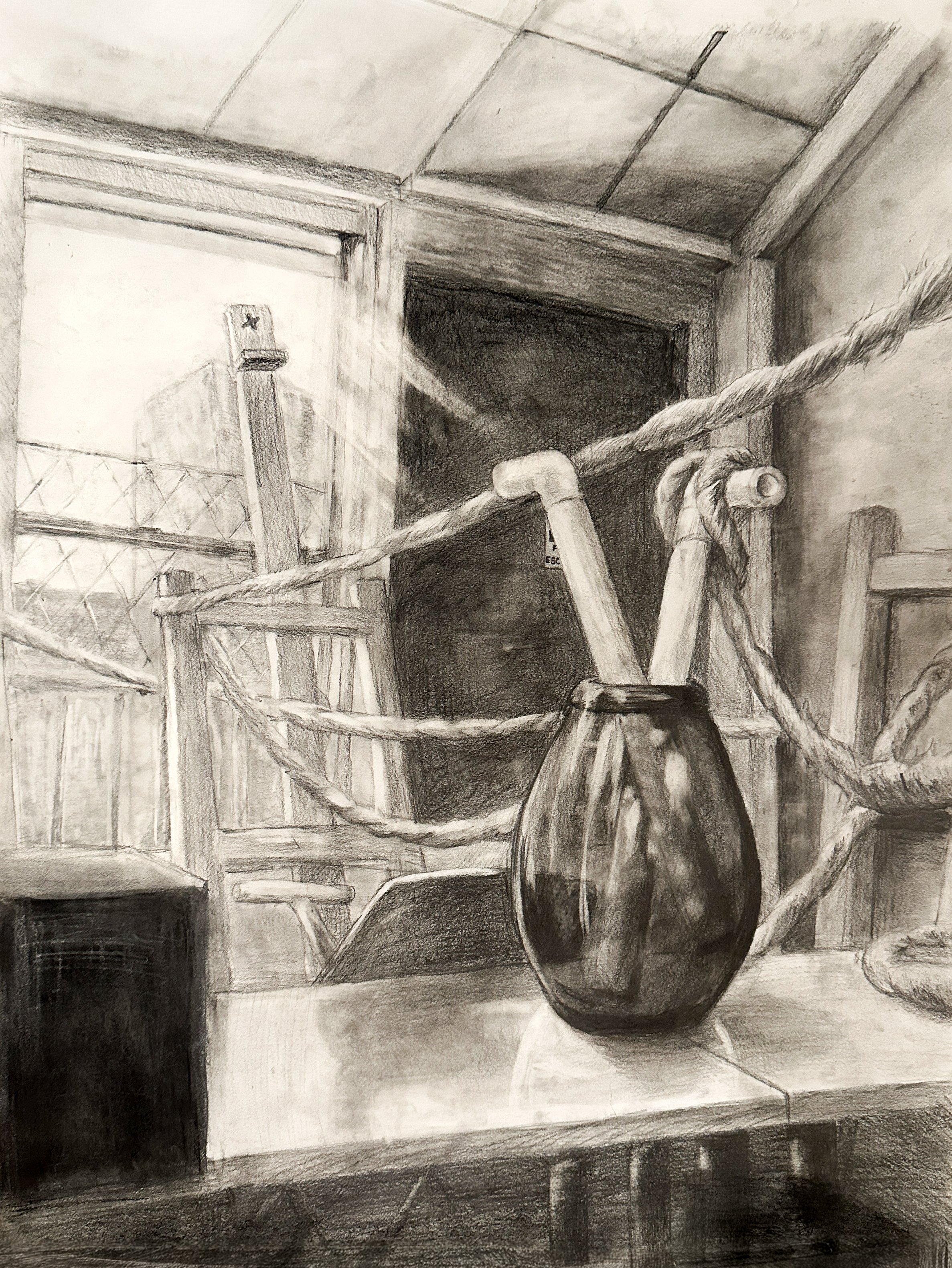
Neural Space
2025, 18x24 inches, Pencil
An observational sketch of an ornamental display I created in my art studio. The installation features easels, pipes, and a vase all connected by intertwined ropes, symbolizing both the interconnection and chaos of a creative mind.
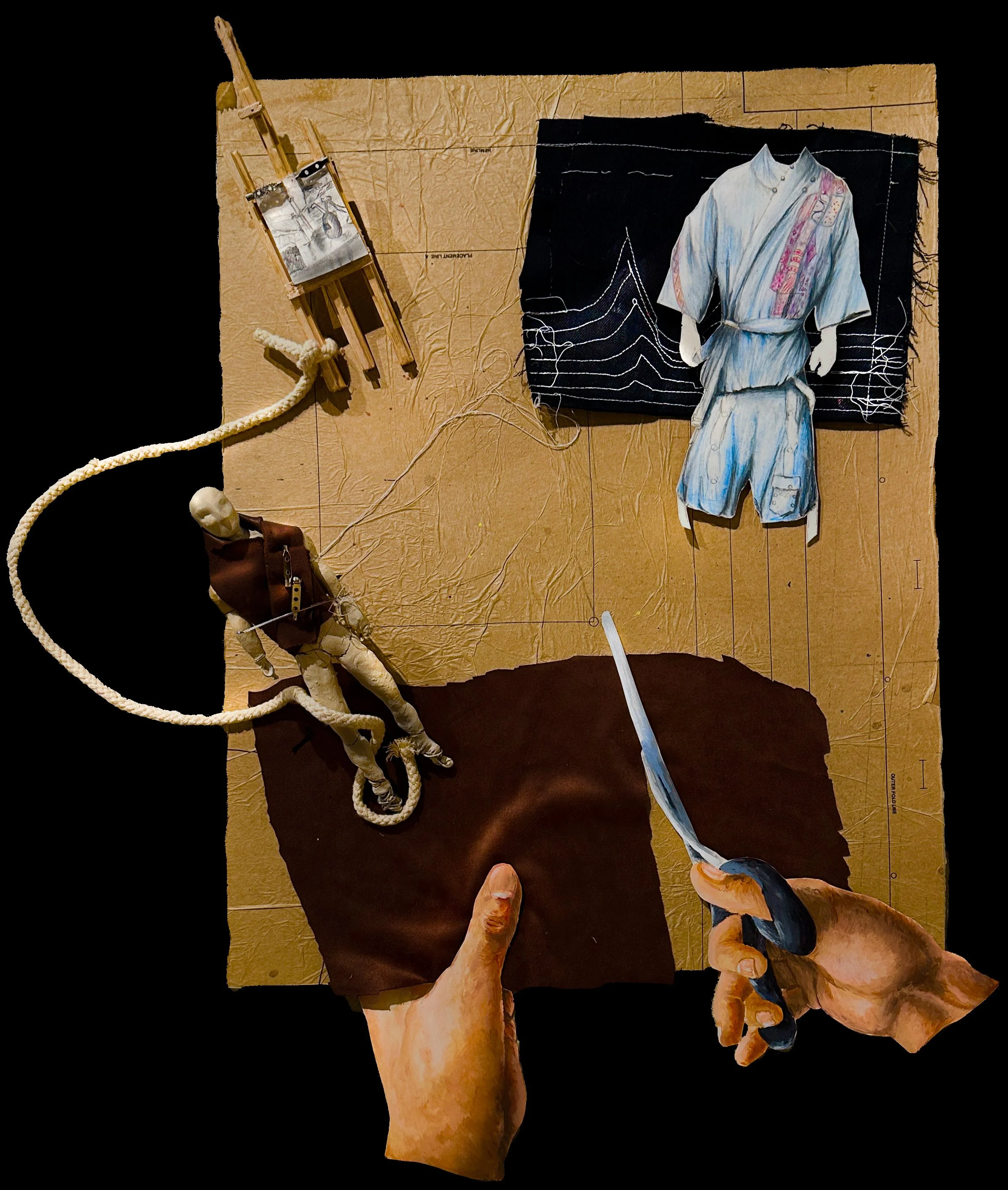
This work is a physical map of imagination—a balance between structure and intuition. The black background suggests the open, mental world where ideas form. Hands cutting fabric, a mannequin, rope, and an easel show how making and thinking connect across different mediums. Through mixed media and layered textures, the work captures the balance and breadth of my artistic exploration.
Neural Dimension
2025, 18x24 inches, Acrylic paint & Clay & Fabric & Digital
In the Spirit of Exploitation
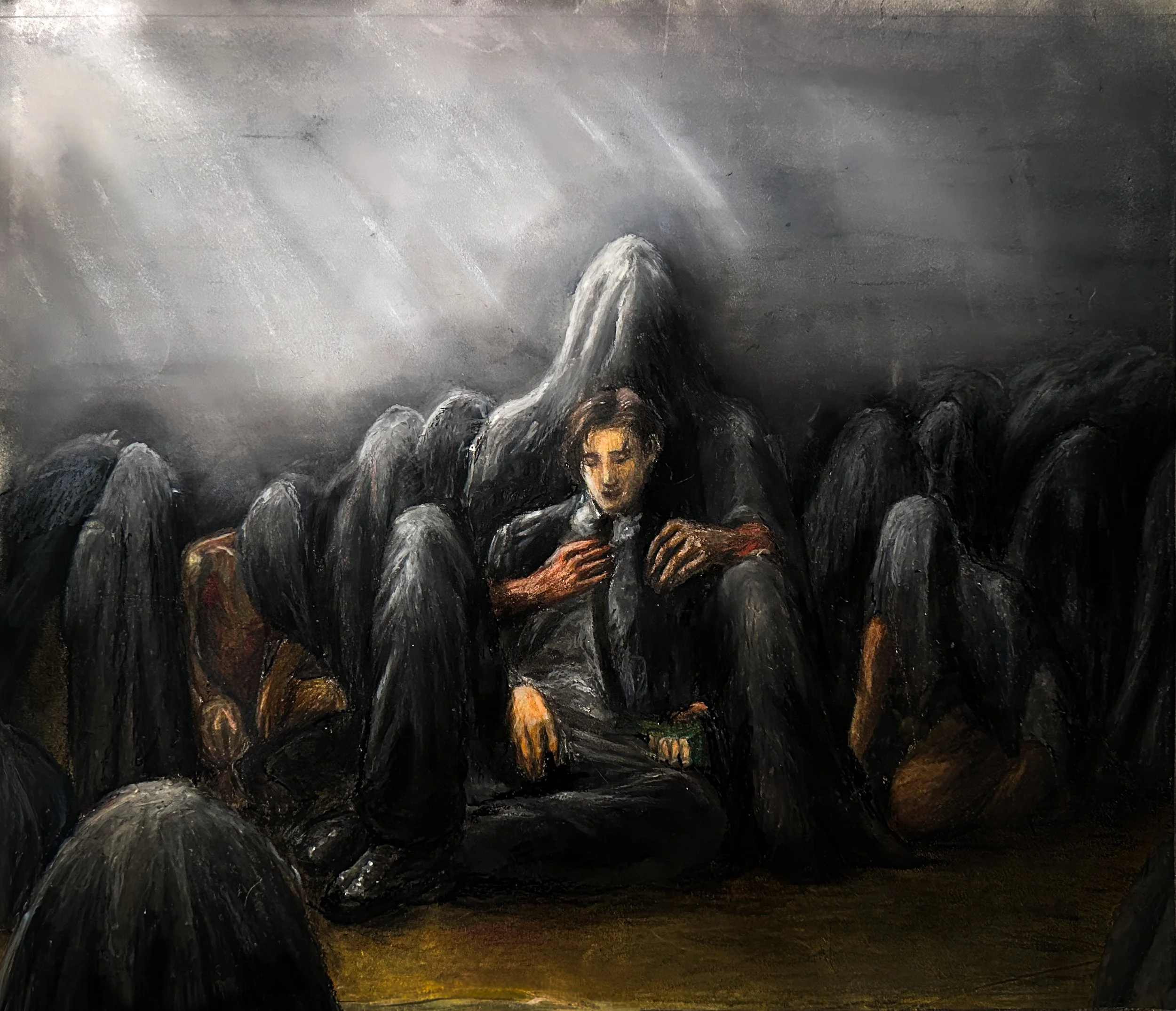
2025, 20x18 inches, Oil pastel & Color pencil
The fashion industry is undergoing an epidemic of unsustainability and overconsumption. This piece depicts a man sat slumped in a vast field of humanoid phantoms—ghostly figures stitched from fabric of discarded garments. His posture is weary, his gaze downward, as though burdened by the weight of the very world he helped create. The man represents us—the consumer at the end of a long chain of waste and exploitation. His posture reflects the exhaustion of those whose unseen work sustains the illusion of effortless abundance. The phantoms stand as victims of a greedy cycle: each figure a specter of overproduction and exploited labor.

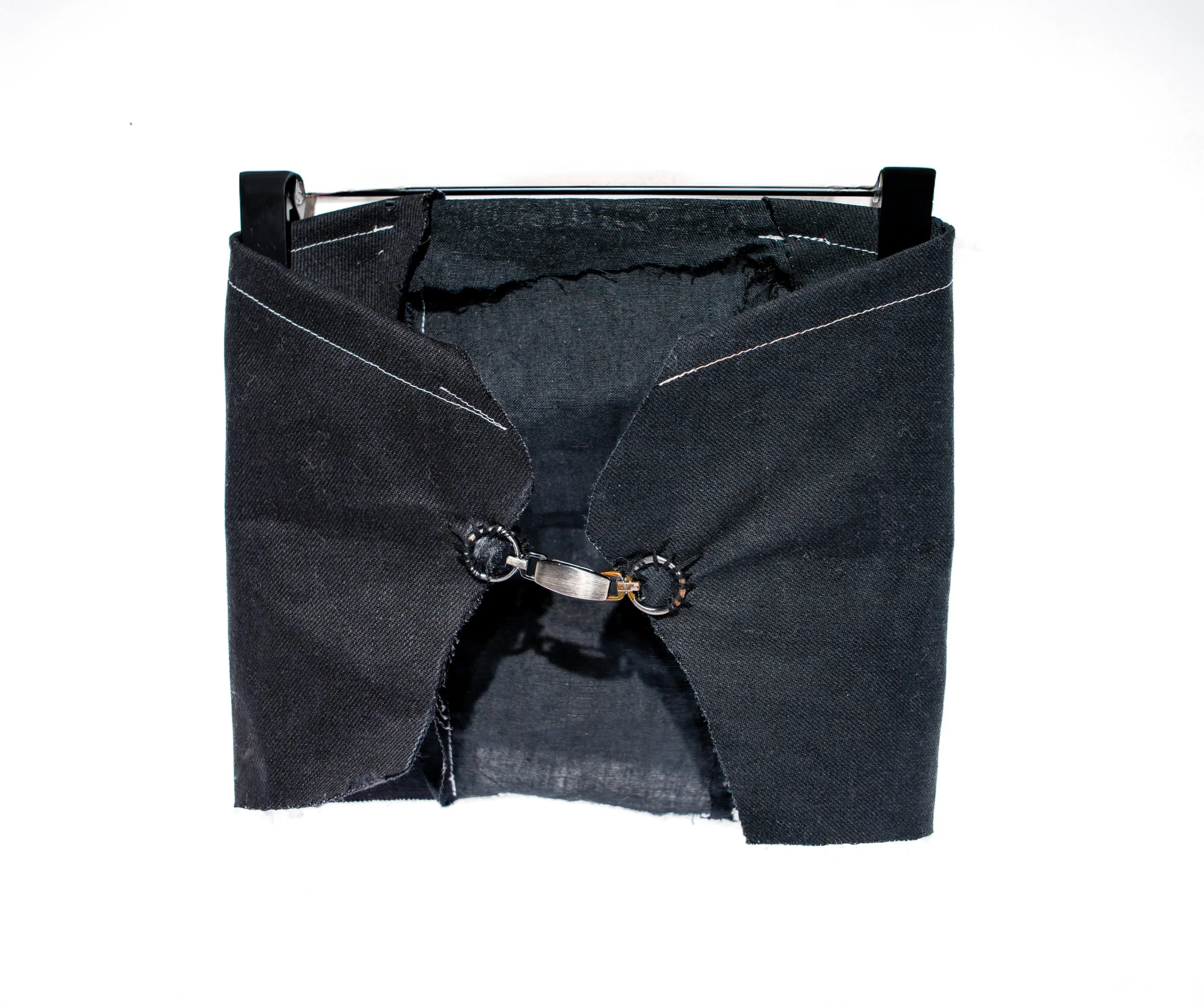
The Workman’s Tuxedo
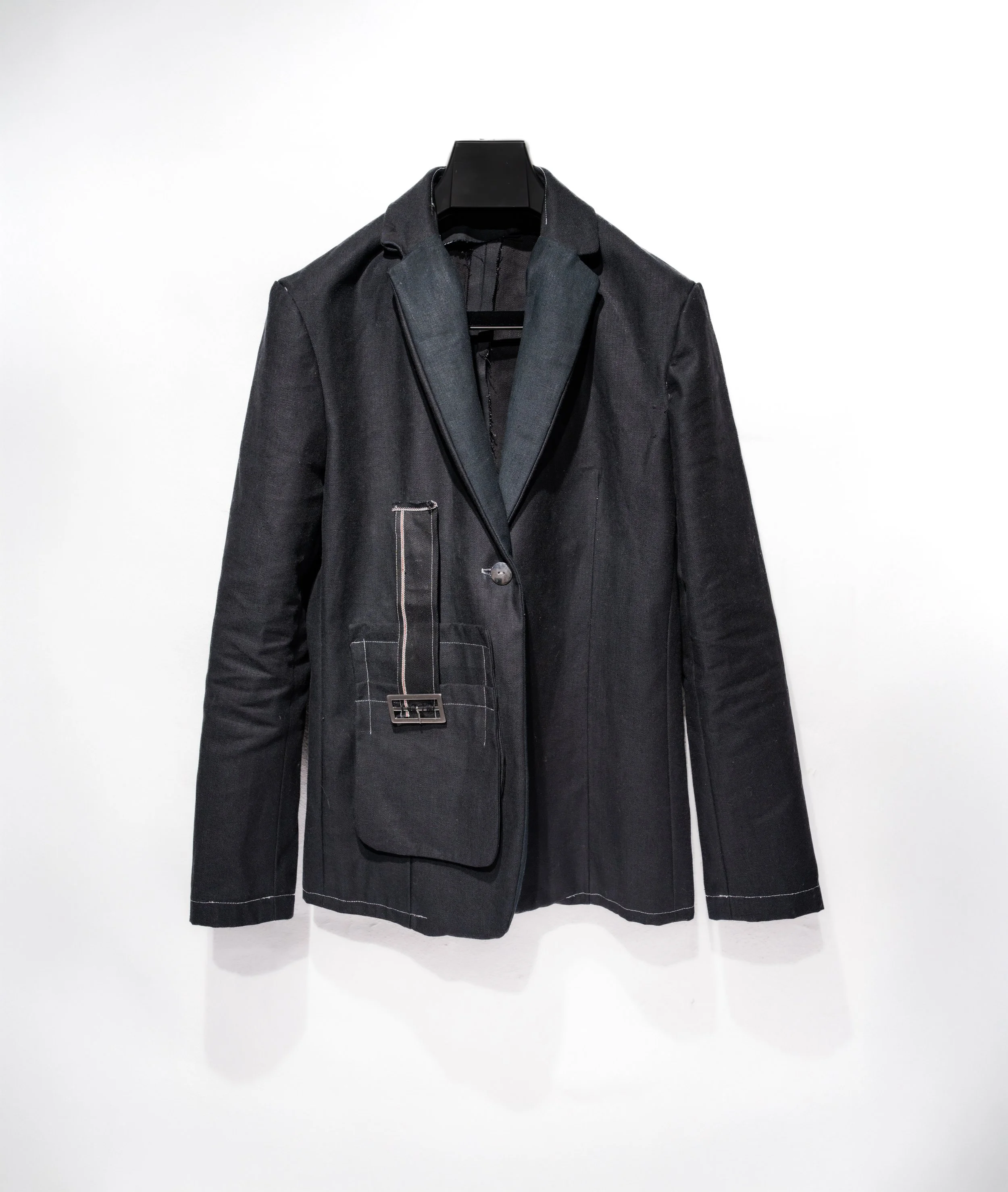
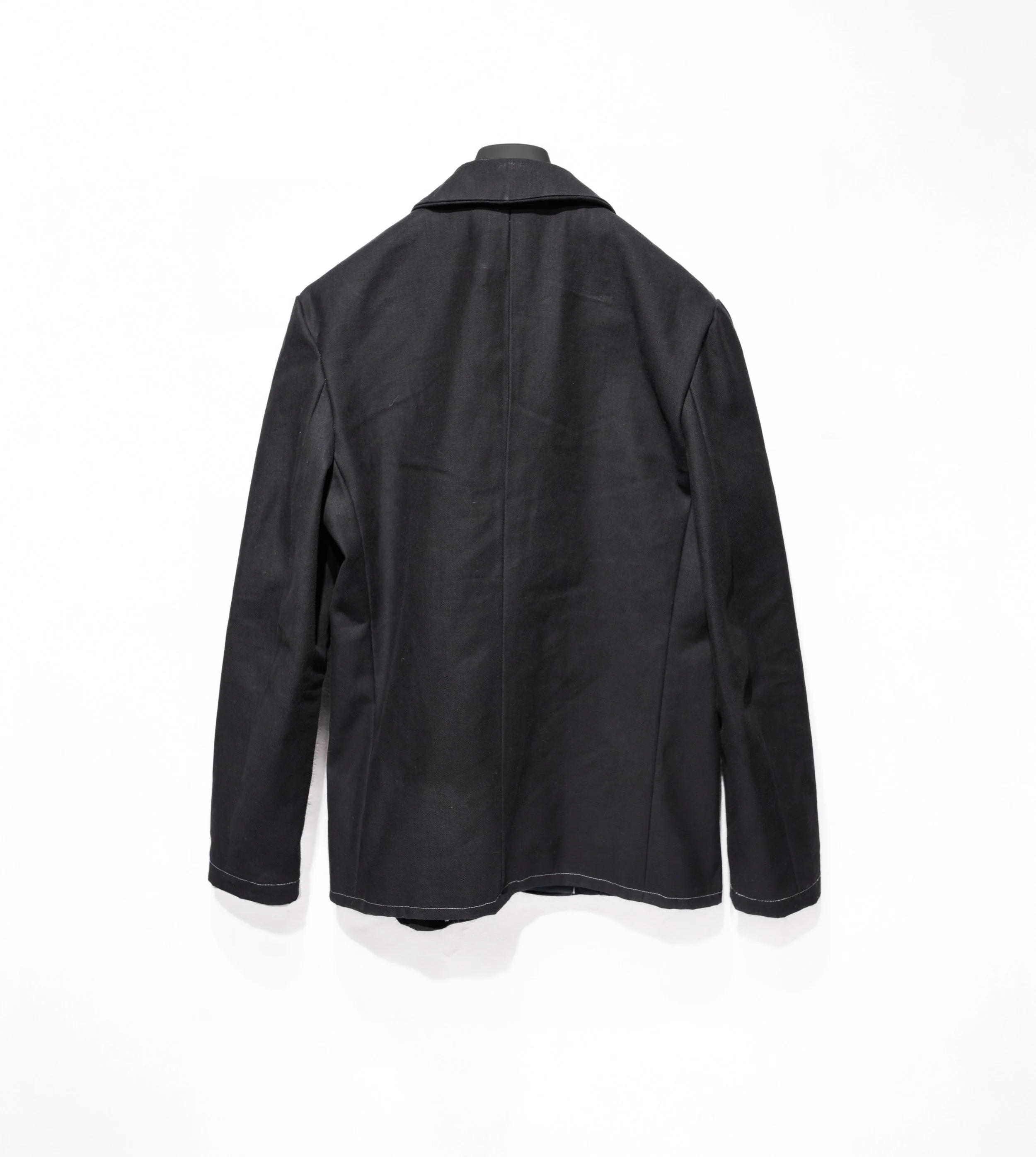
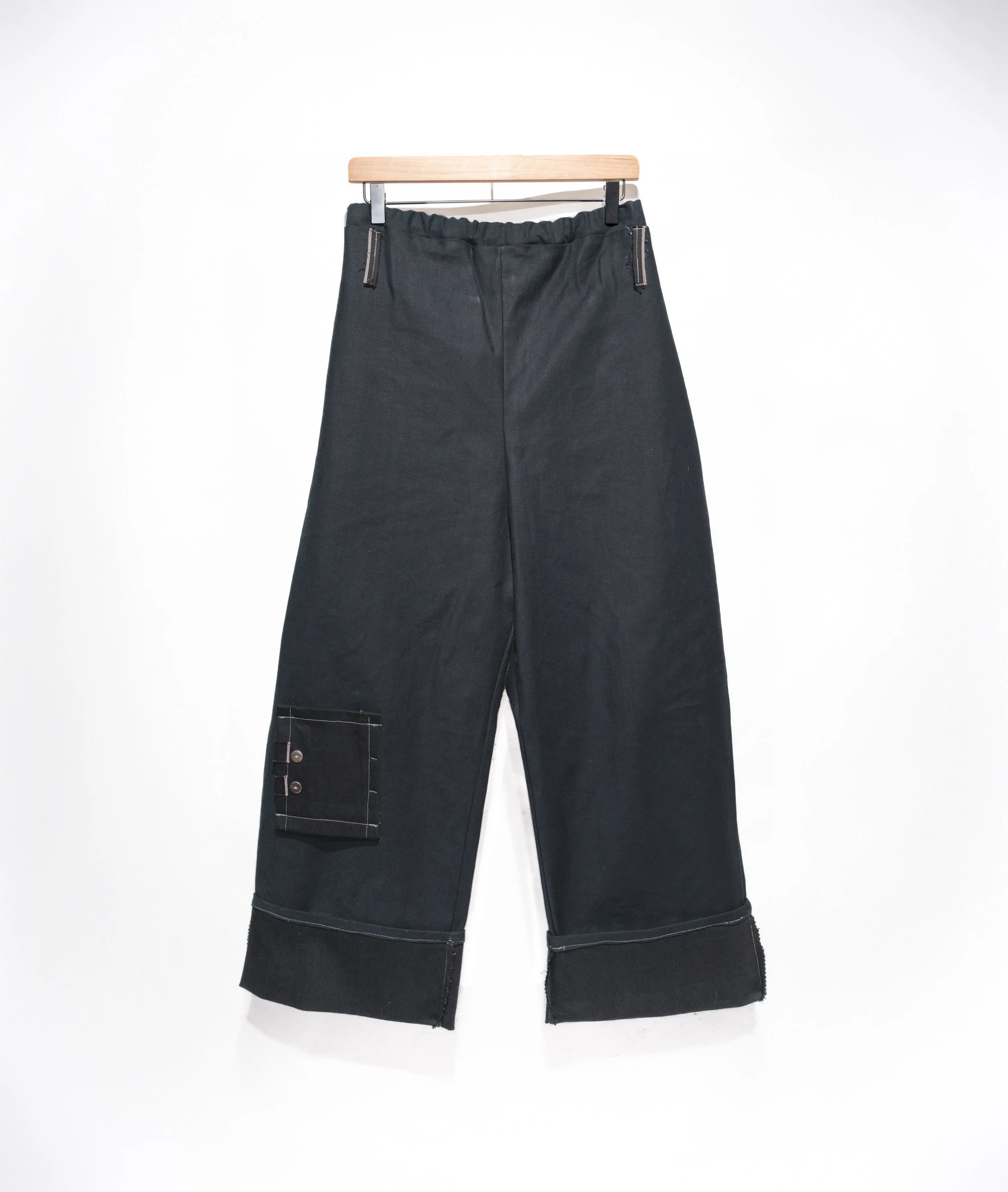
2025, 42 inches (Jacket) & 46 inches (Pants), Denim Fabric
In a culture that’s quick to celebrate the rich and powerful, this piece pays homage to the workers. It honors the work of my grandmother, who was a seamstress, and much of my own family, it’s a celebration of their craft and skill.
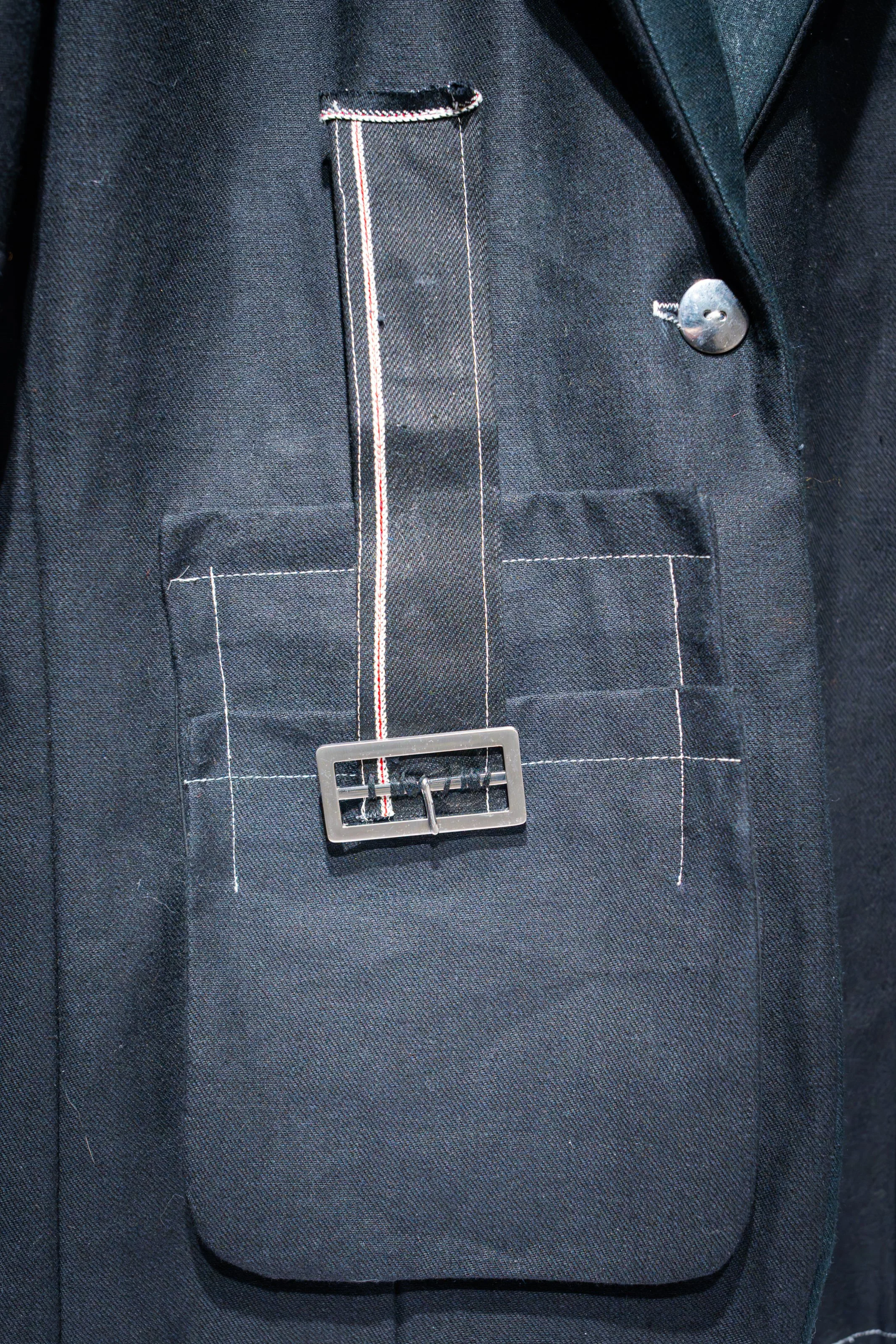
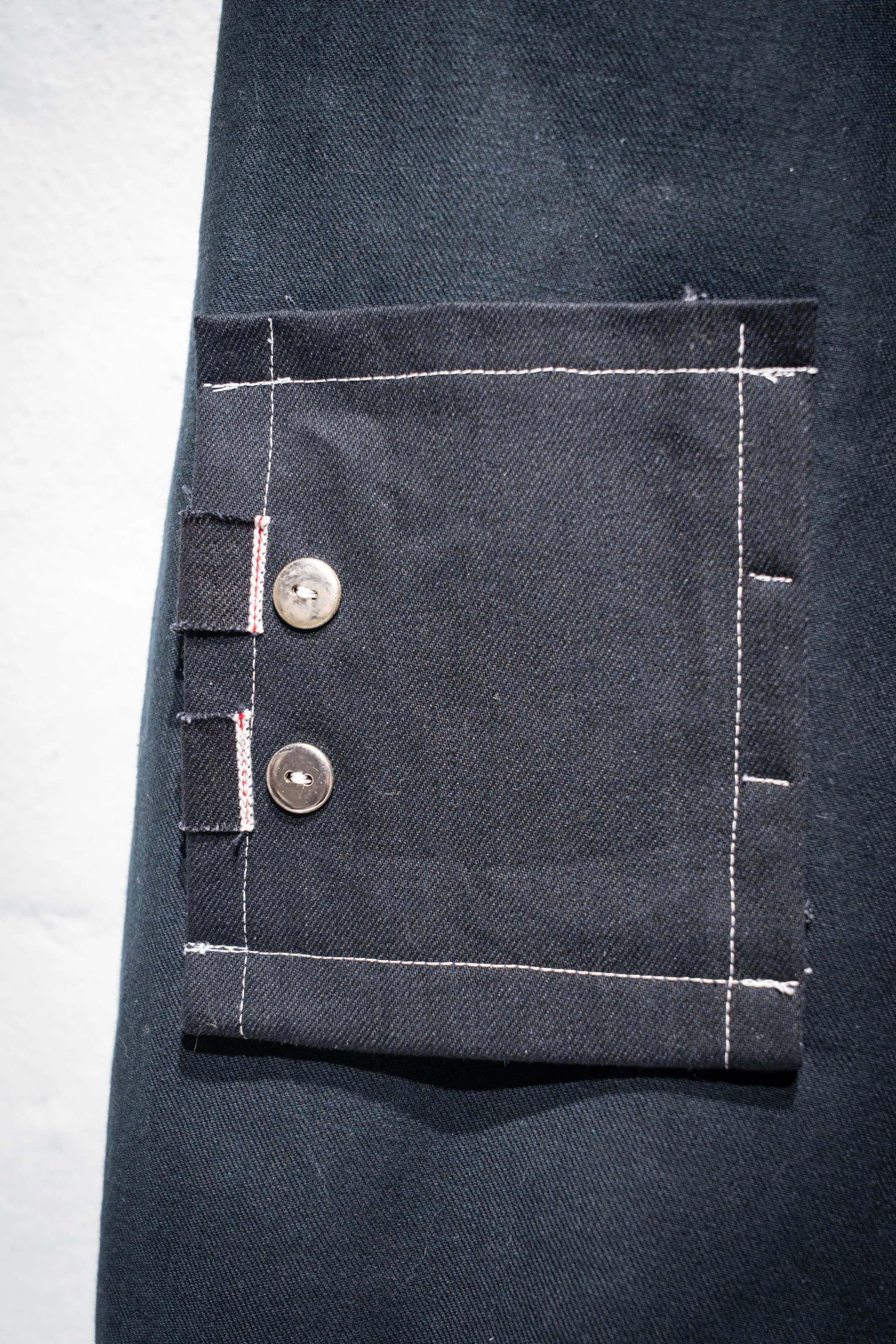
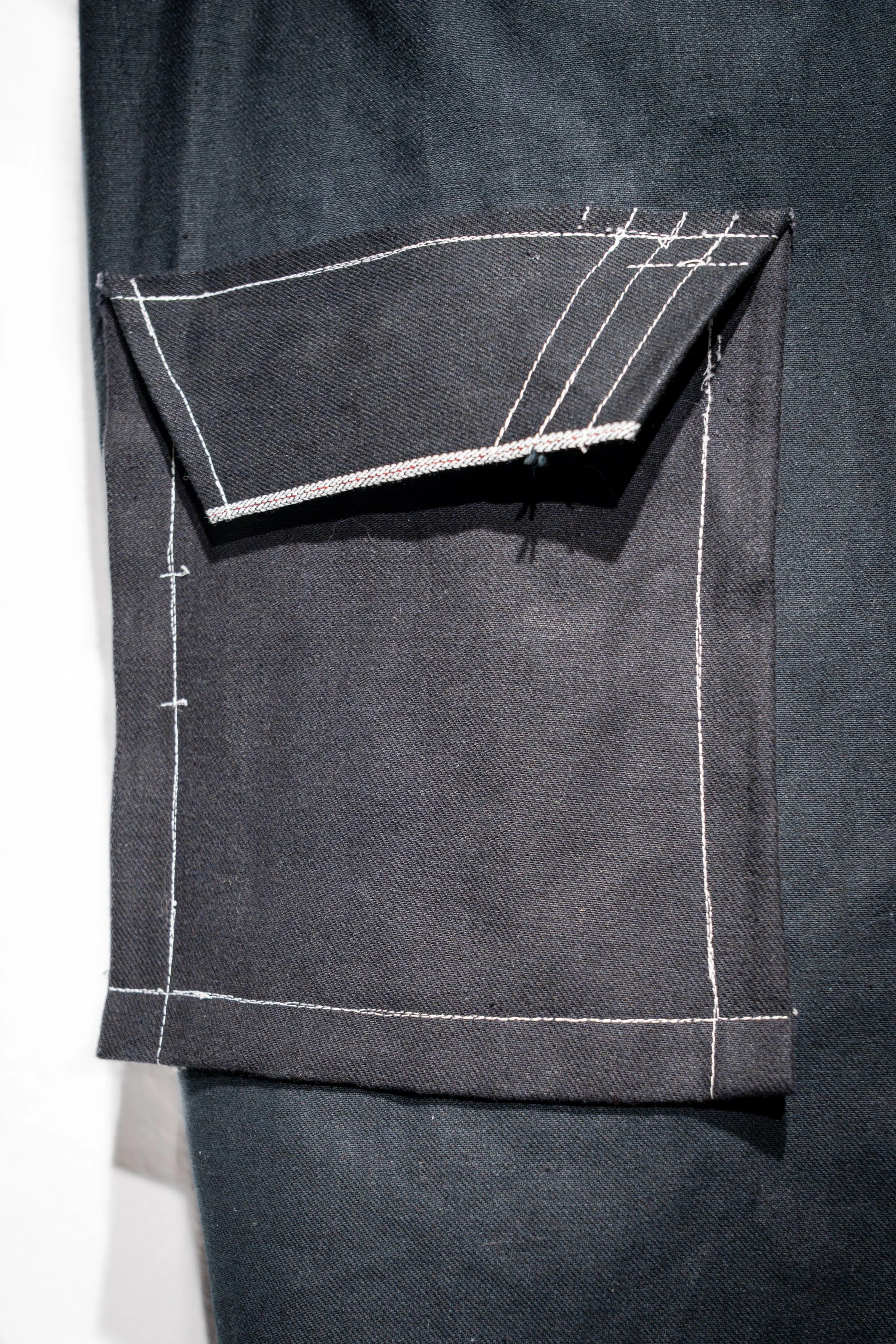
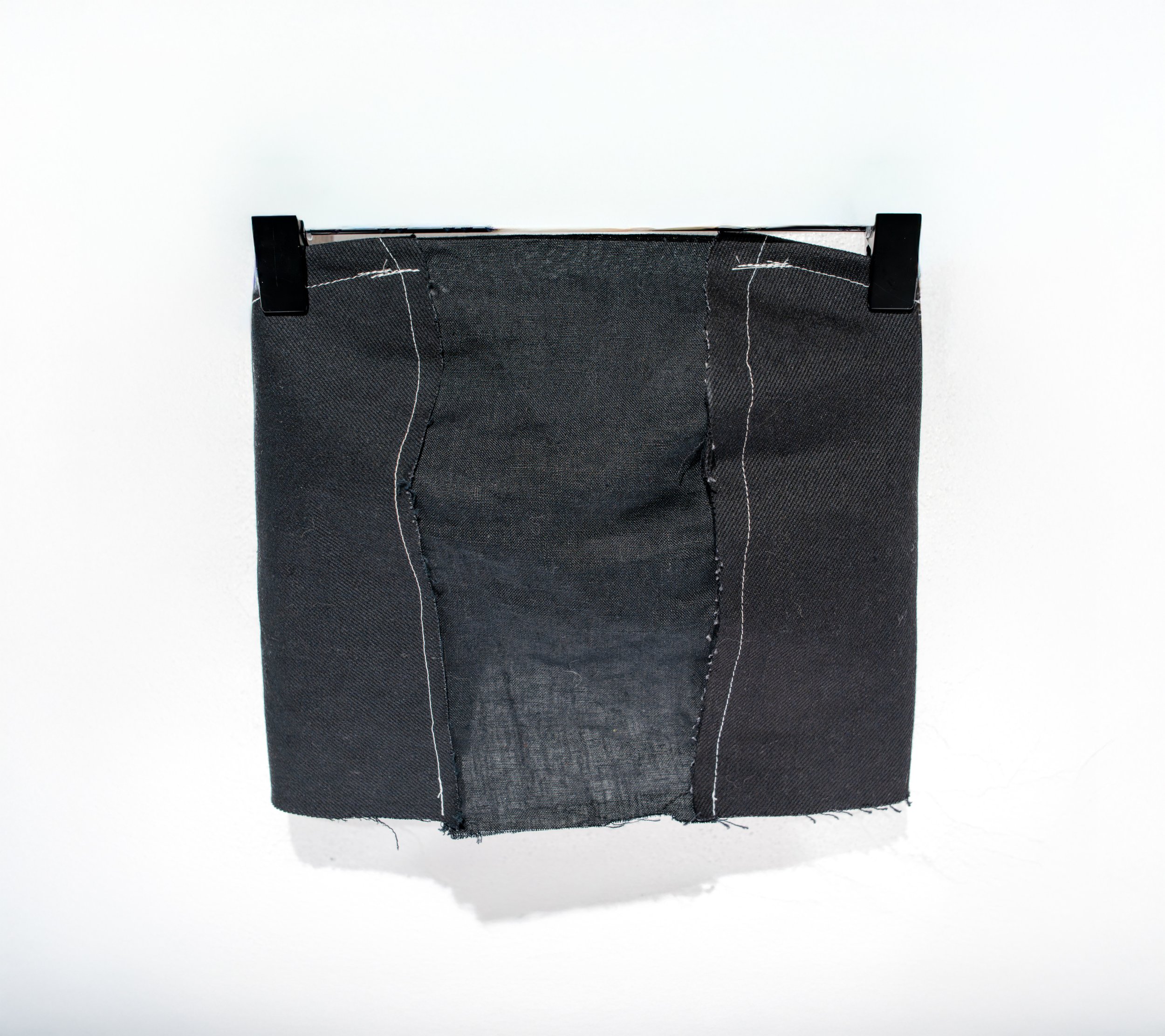
This reimagined tuxedo challenges the notion that refinement must conceal the work of the hand that made it. Visible stitches trace the garment’s anatomy like veins. Pockets, once hidden for utility, are fastened with deliberate buttons, placing functionality above formality. Raw selvedge edges run across the garment’s embellishments, preserving the material’s origin and challenging the erasure of the visible signs of construction that luxury often demands. A buckled strap extends from the jacket pocket, suggestive of both adornment and workwear.
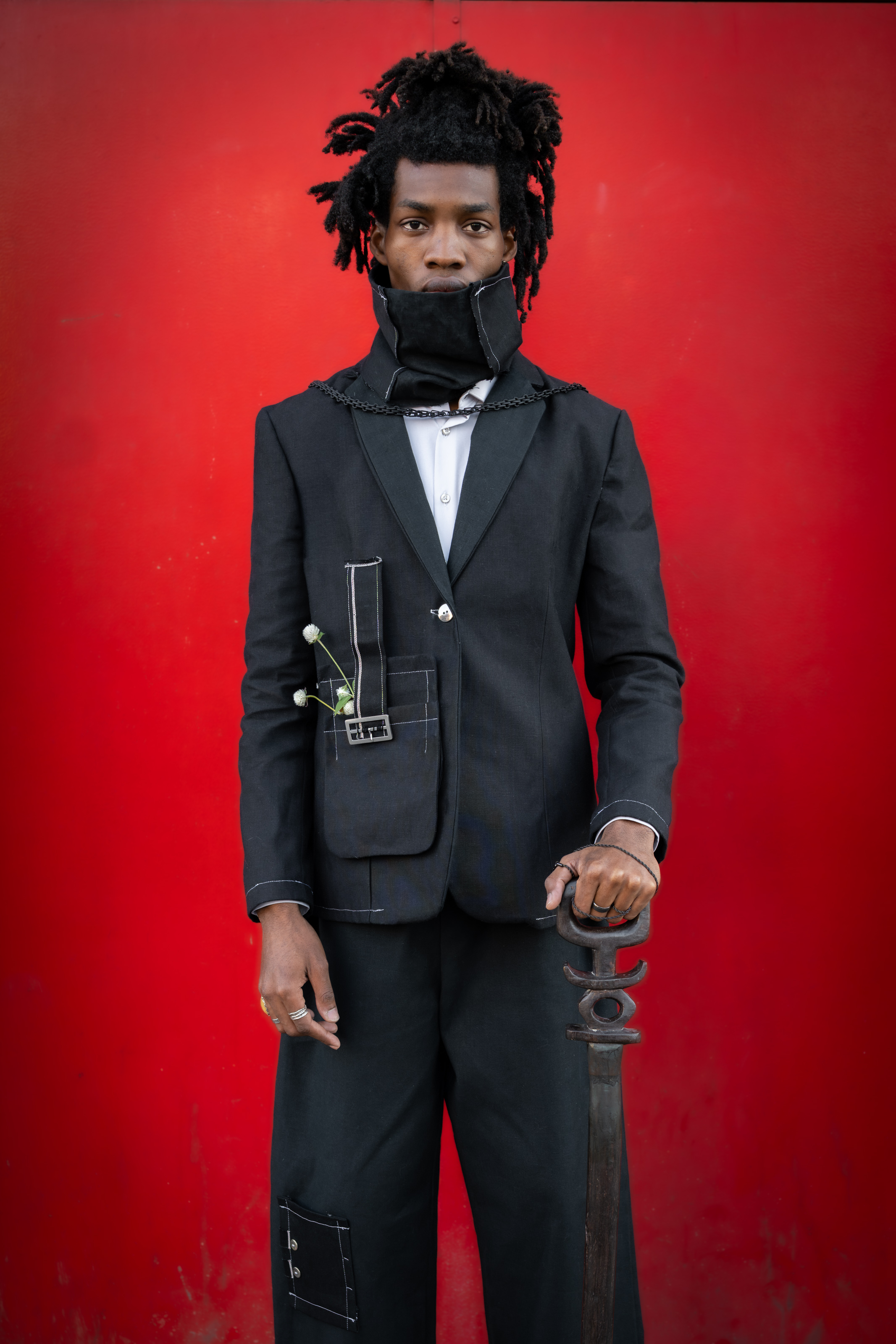
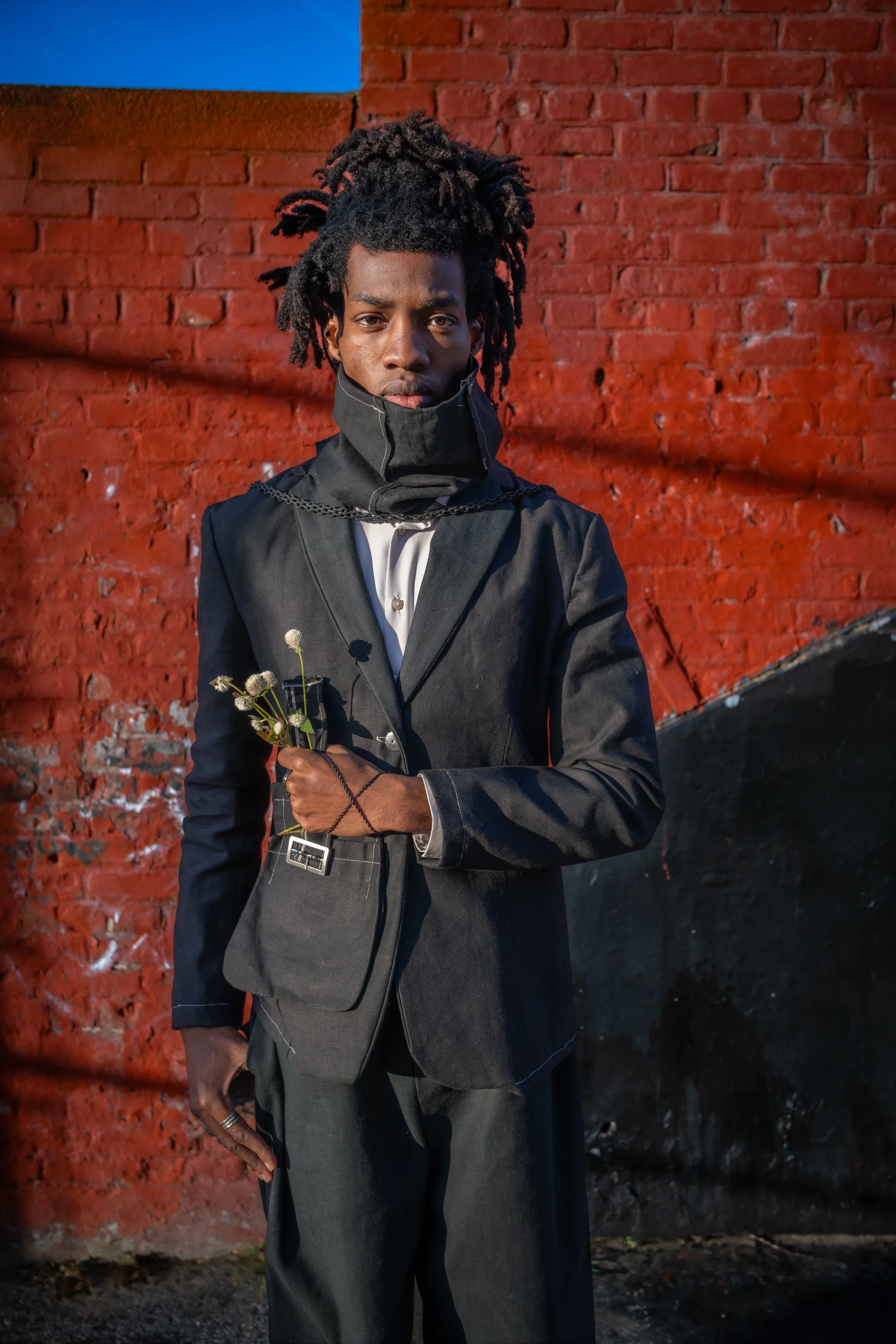
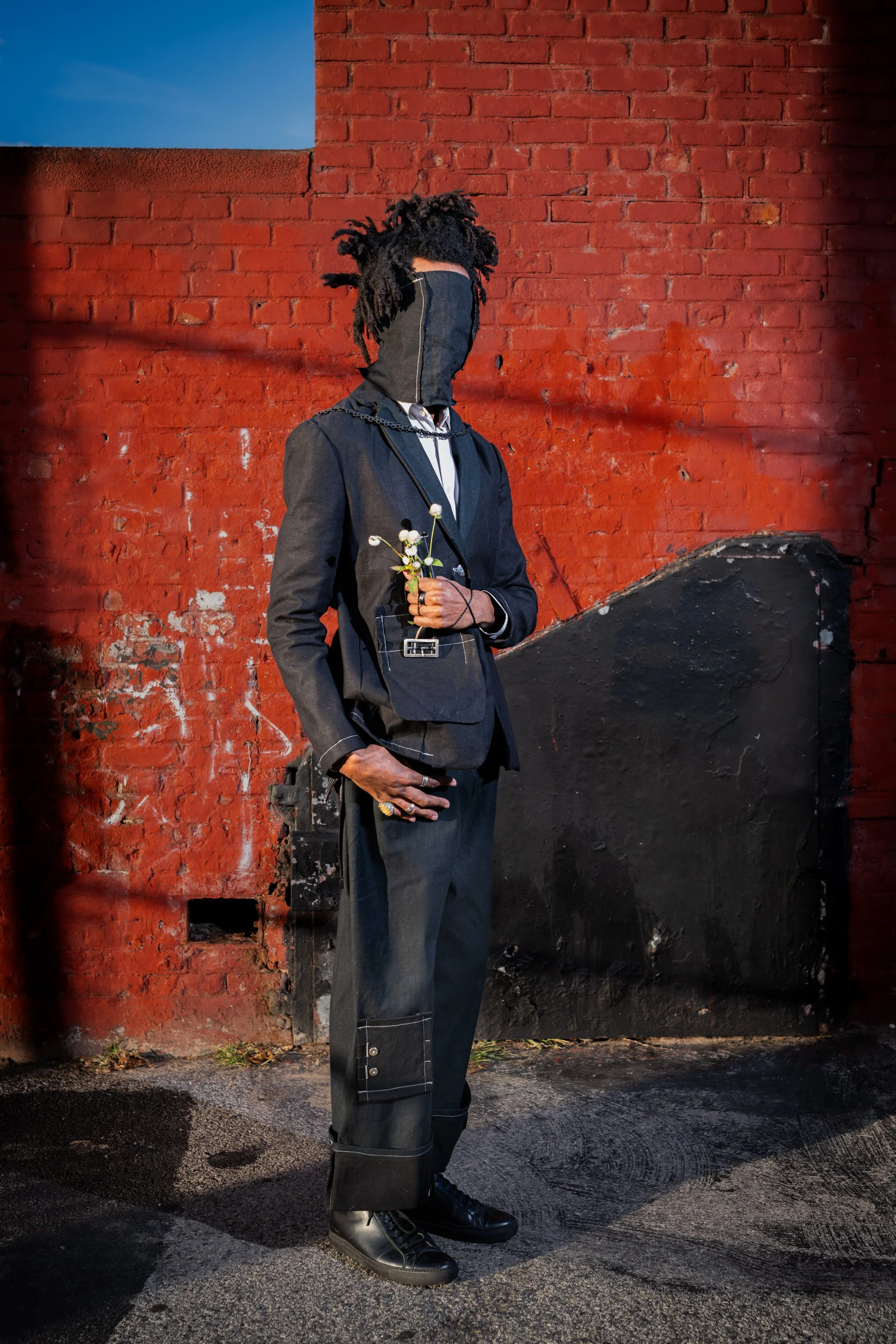
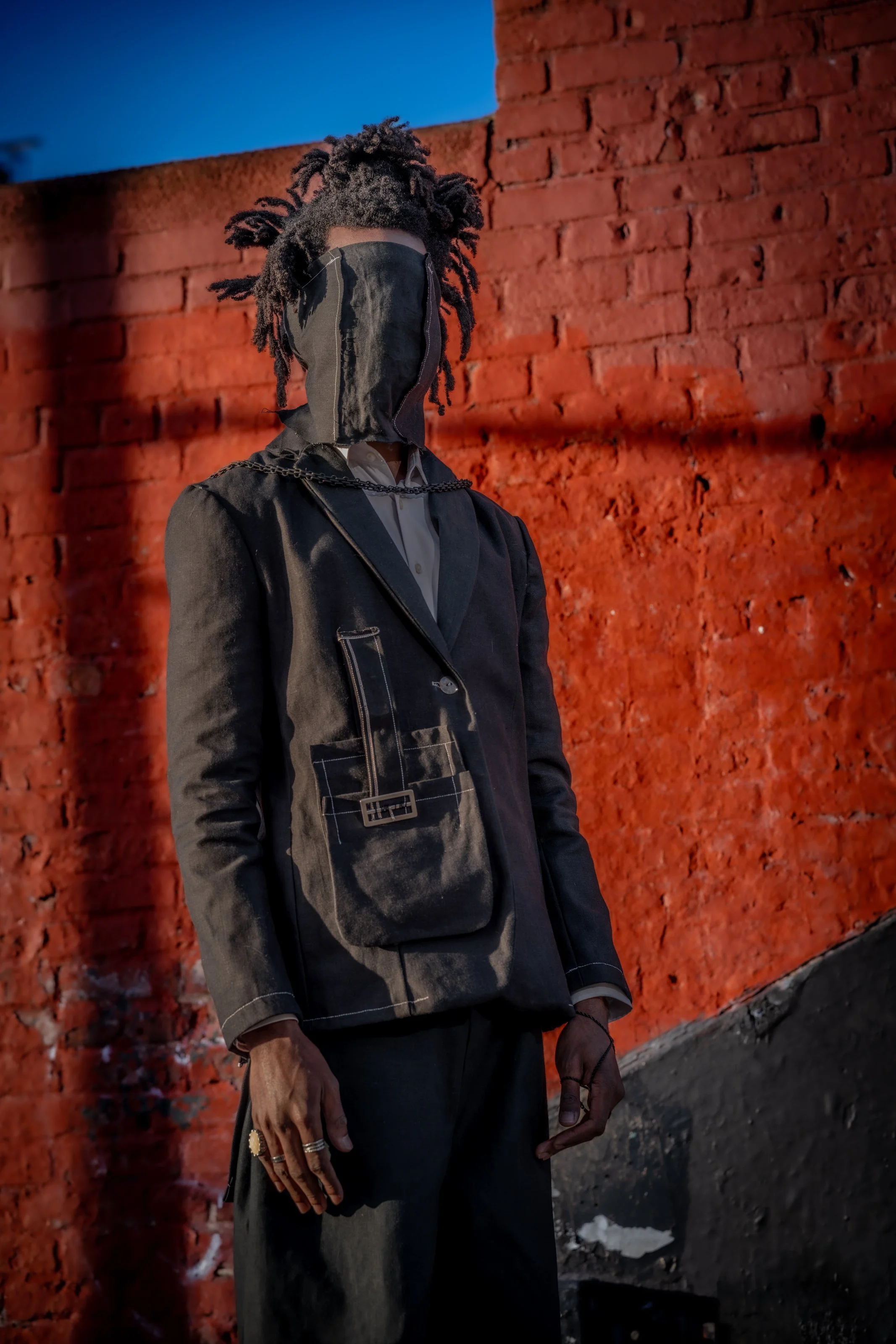
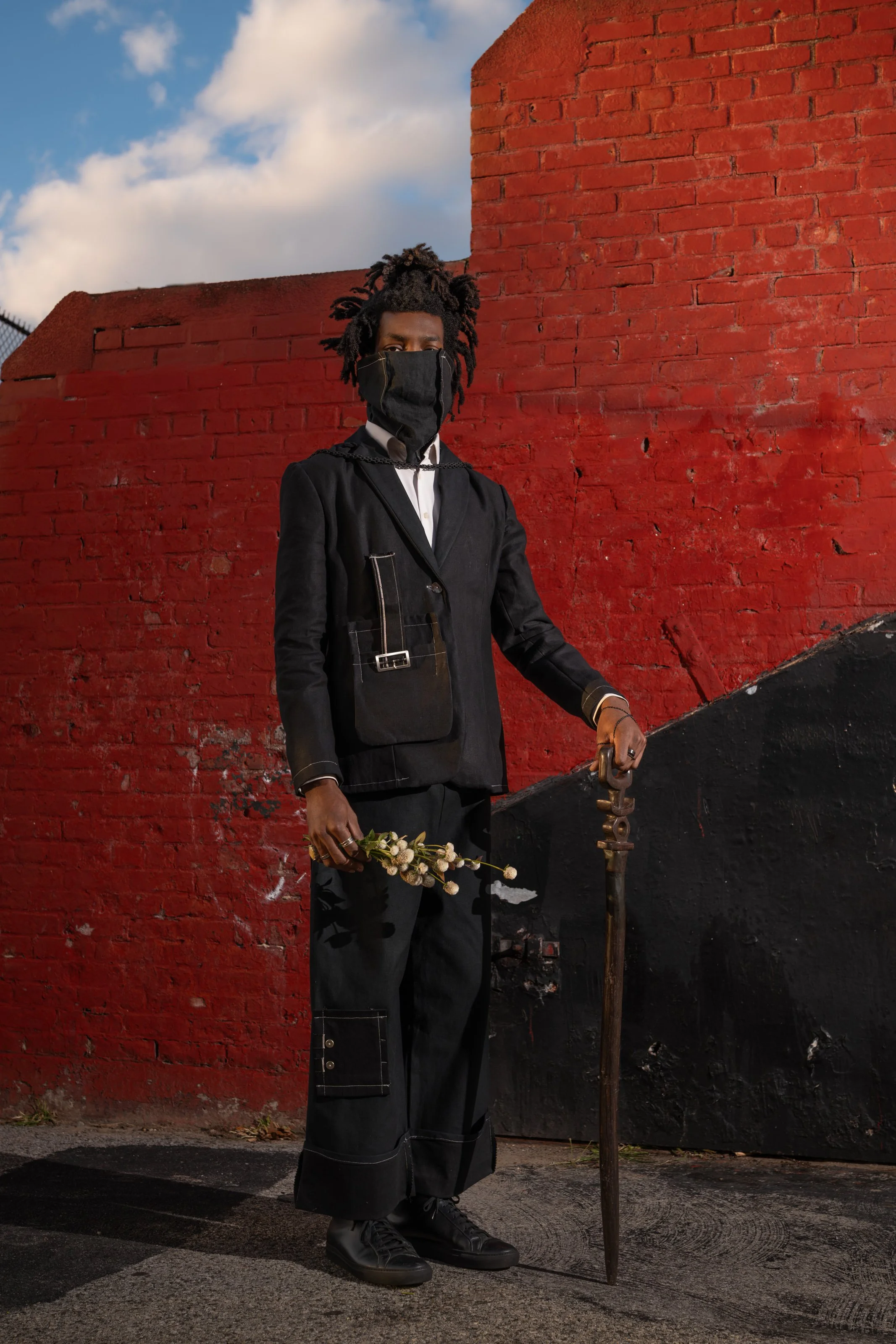
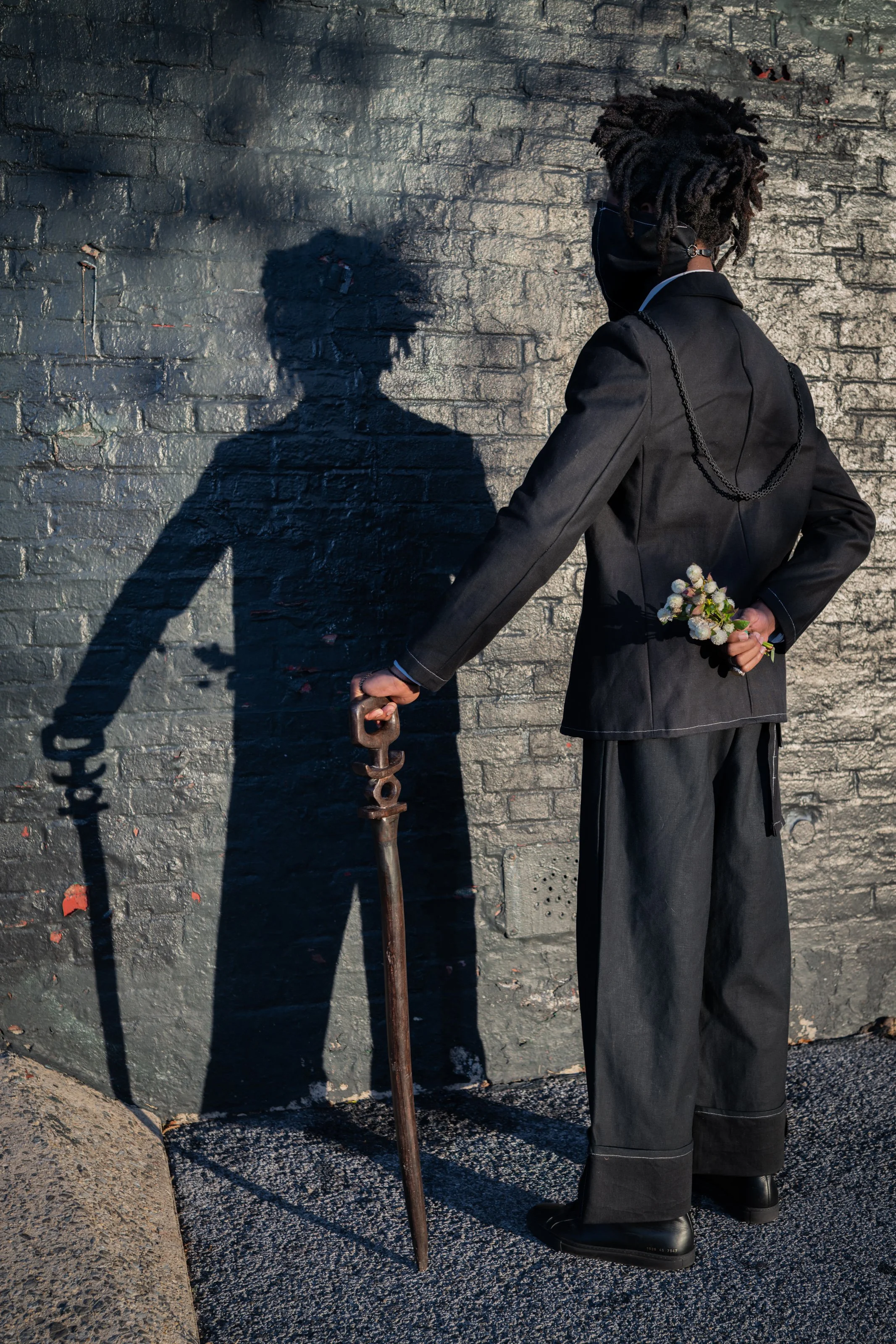
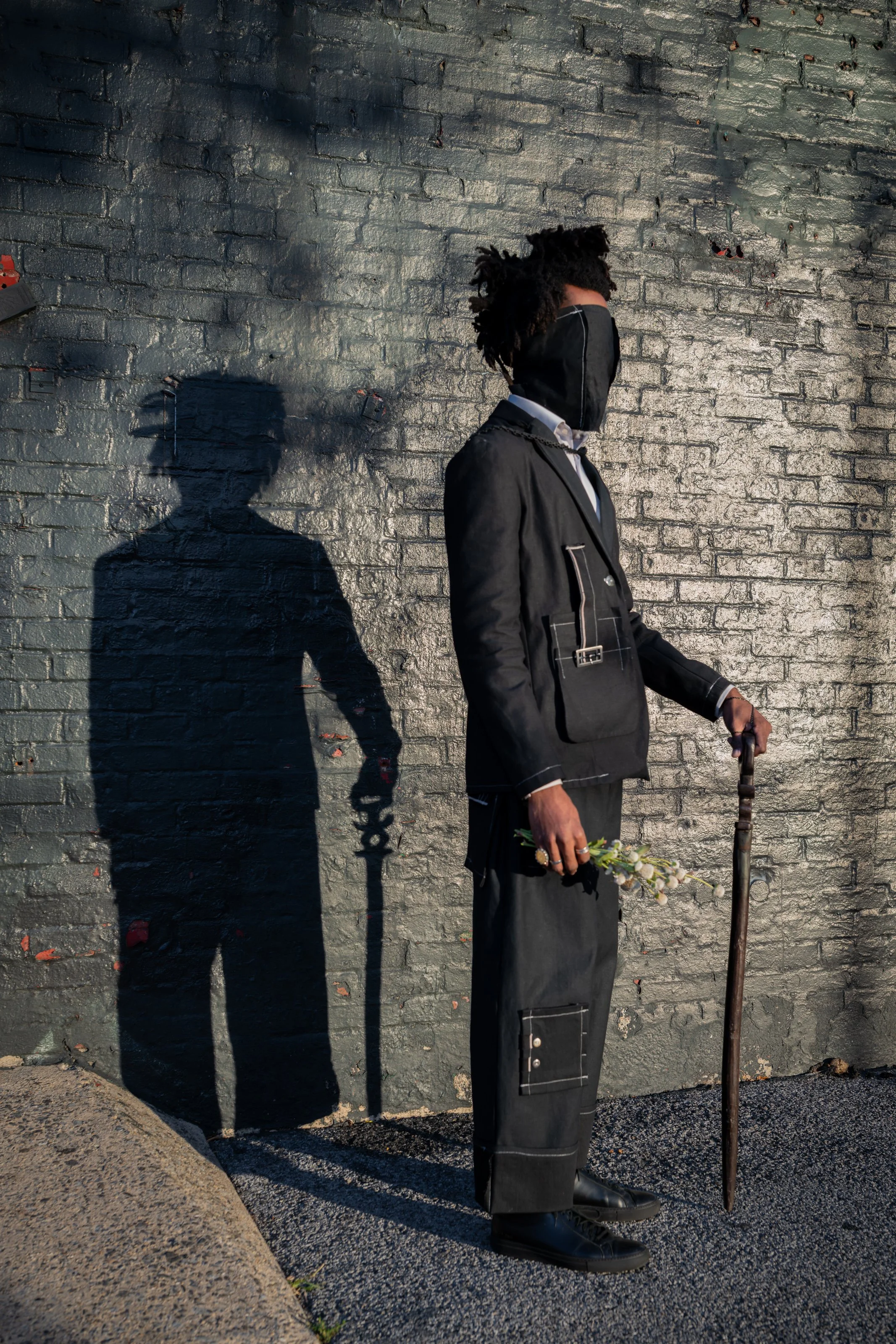
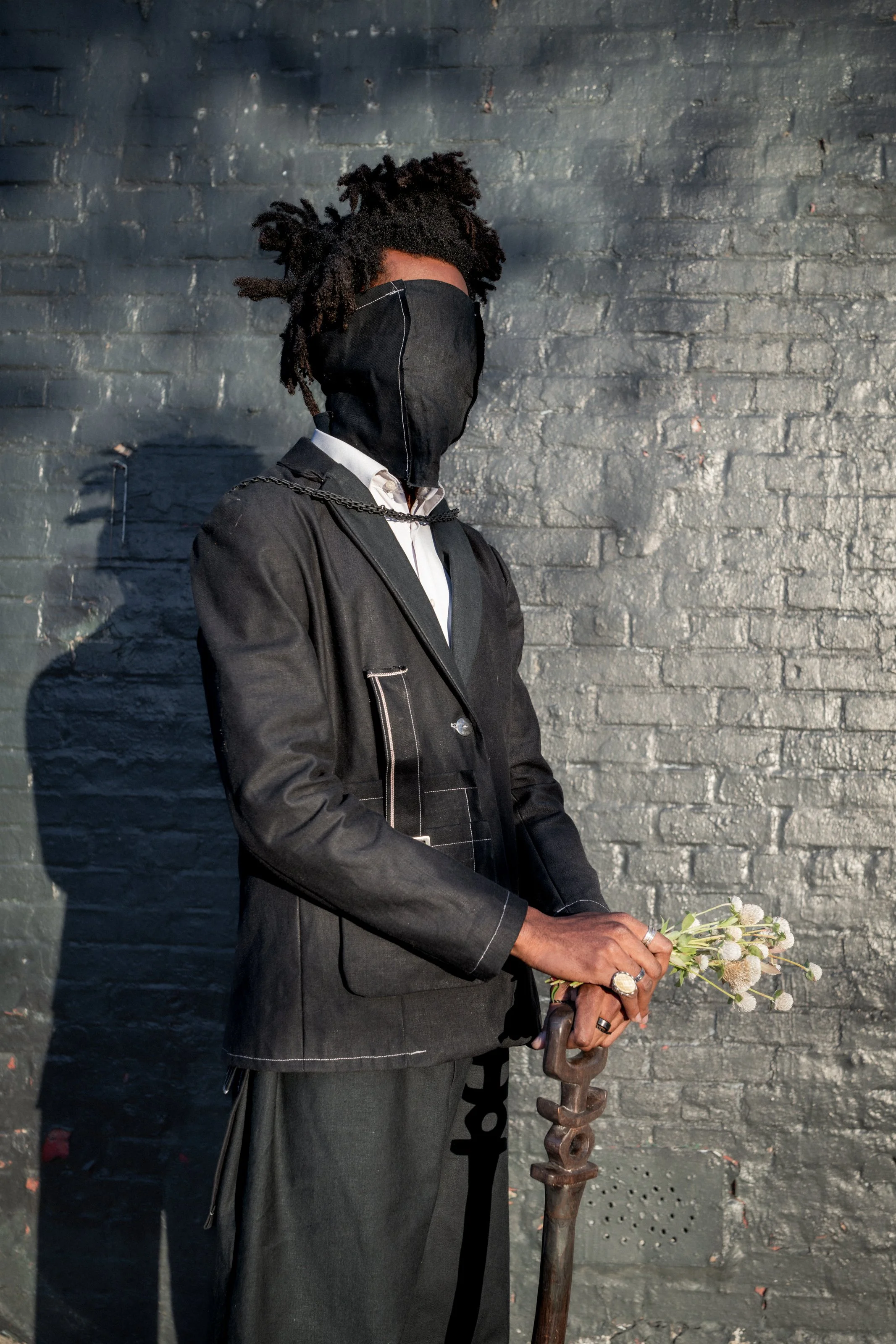
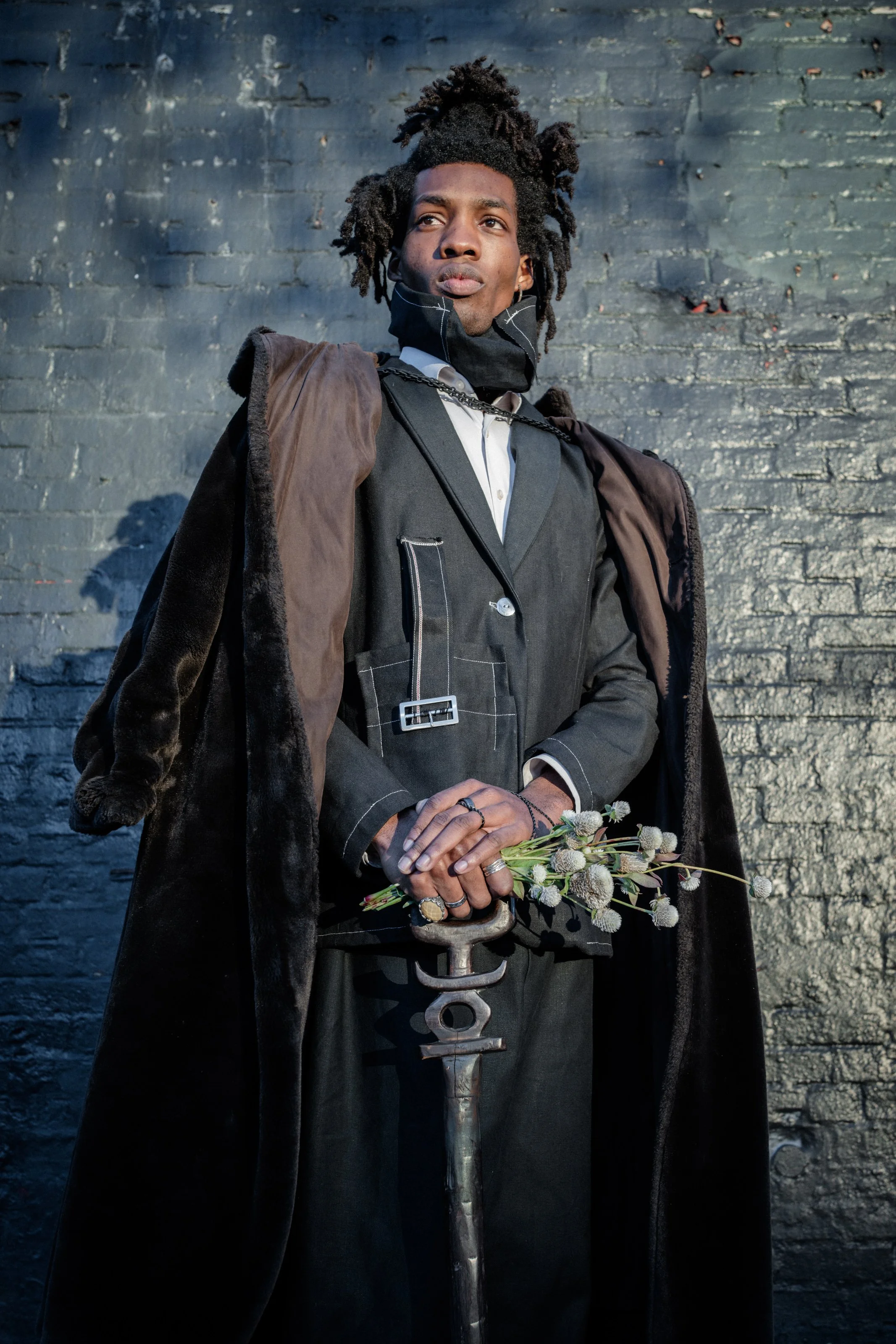
To elevate the philosophy behind my garment, I art directed and styled a photoshoot.
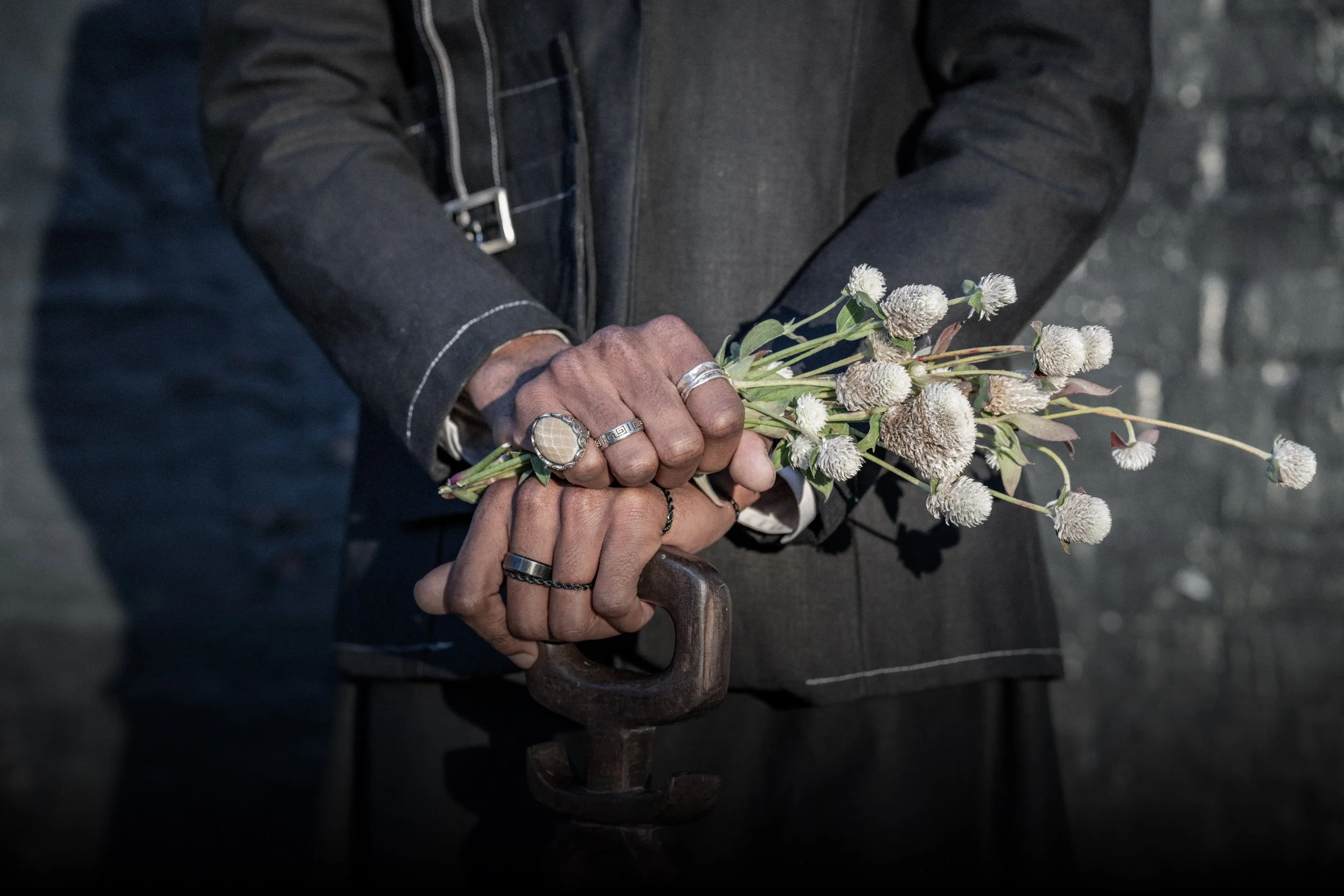
At first glance, the red backdrop seems uniform, but closer inspection reveals stains and imperfections, while the brick walls echo the suit’s visible stitches and selvedge edges celebrating imperfection and the process. The hand carved cane evokes both authority and prestige, while the white flowers tucked into the pocket act as gentle symbols of humility and resilience of the working class. The denim mask, covering the model’s face in some shots, is a reflection of the invisibility of the laborers whose work goes unnoticed.